


Good morning.
Saskatchewan is under a heavy blanket of snow. My wife is visiting family and sent a video of it coming down in thick sheets. I am in Brooklyn. My dog found yesterday’s unseasonably warm temperatures oppressive. The AC went on. I was happy to be inside, stuck in an AI vortex, comforted by the hum of a CPU.
If you use AI regularly — in deep or superficial ways — you will find it delightful and maddening, supremely useful and deeply imperfect. More so than humans. AI is not ready to take our place in the world. I can assure you of this.
I used to play with computers. I’m doing it again and it’s fun. Play is a powerful motivator. Underneath, I seek deeper insight into what all this stuff is going to do to the world, to business, to investing, to my family. I want to understand what it does to media.
You may tire of my goings-on about my vibey projects and that is your right. I do try to connect what is interesting to me with what might interest you. But there is no “should” in interest. Something is or it isn’t. You will decide.
I am stumbling through a land whose people speak a different language than me. AI is my interpreter. I am old but not ancient. I like to think I bring the wonder of a younger mind. I have worked on technical projects as a product and business lead for pretty much my entire career. Now, I have no sherpa. But this is different because I can do most things myself. Empowering is a stupid word. People who use it rarely mean it. This technology is all of it.
Let me get to the point. Media companies, like any knowledge business, have people, process, memory and culture. Technology supports them all. Content management systems, design software, Slack, Google Analytics, and Docs are some of the tools that make modern media work. All of these things are in service of making a product that is useful to humans. That product’s promise is embodied in an editorial brand. The brand in media is trust — the most important encapsulation of its long-term value.
It’s a point of view. A set of guiding principles. Reliable like an old friend or your mom. It unfolds in the brand’s culture, that invisible thing that surrounds the people who work every day to bring the product to life. New talent will need to reinterpret it, reshape it in culturally relevant ways, hopefully without killing its transcendent spirit. Until it needs to die and rise anew. But, at its core the brand carries media’s spirit. It embodies organizational memory. It gives a media company its spinal cord of continuity.
AI can’t magically replace all that. AI can’t really even write this. But I’m pretty sure it can help me make better stuff way more efficiently.
So ya.. I did the expected and made a machine that pulls together my media universe — not unlike the machines you probably use every day to ingest lots of media. This one was designed for me, and that is “empowering.” But it was missing something vital. It had no memory. No brand. Nothing that could reliably shape what it pulled from the world each day in a way that made me happy.
I had been reading about the simple wiki architecture that the poetic AI thinker Andrej Karpathy created to codify his personal knowledge — his personal graph of concepts. The idea was straightforward: load the machine with your stuff, have it organize things, look for connections. Feed it and watch it grow. It struck me that my little media machine could benefit from the same idea.
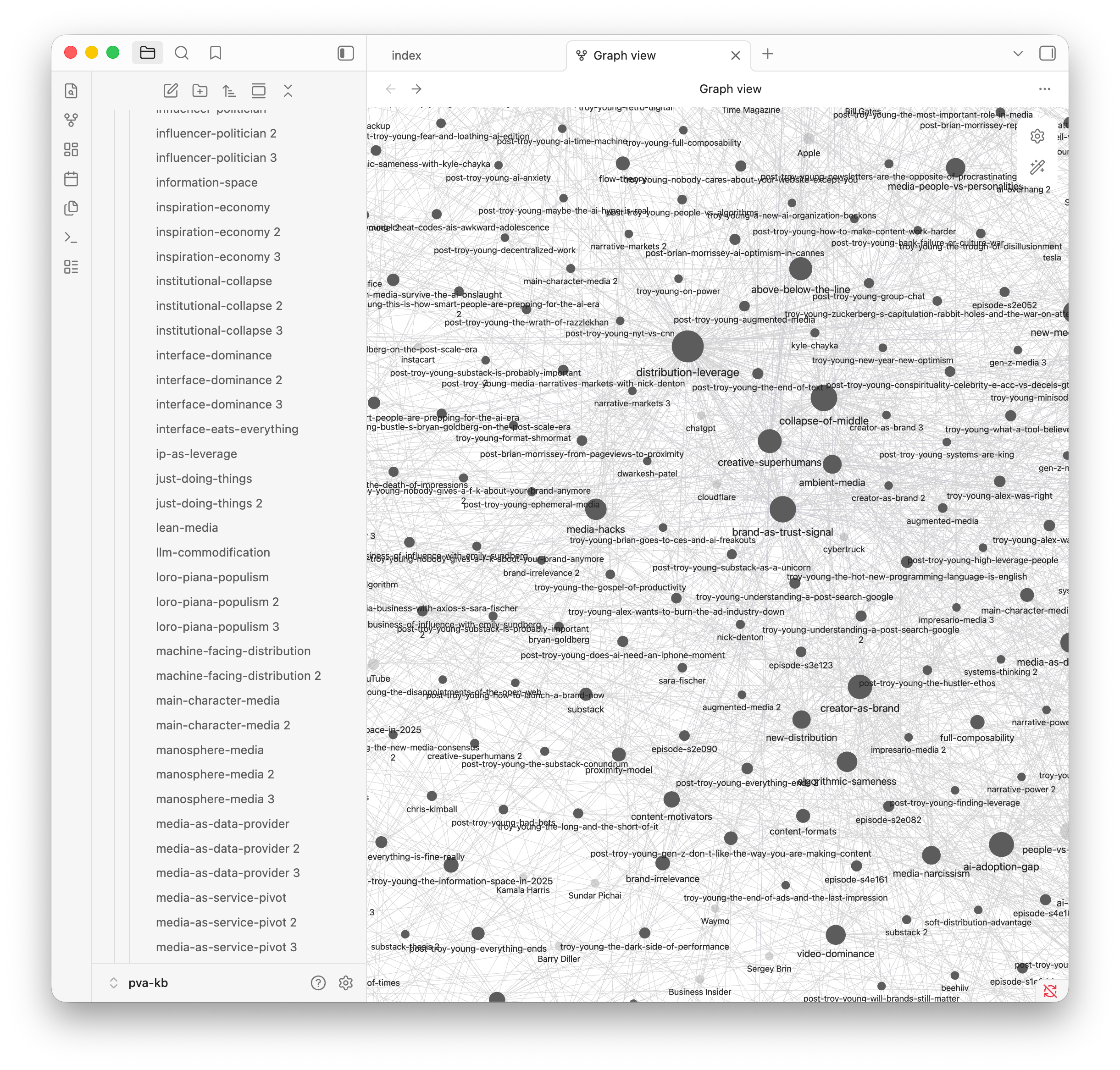
So I made a PvA wiki, stuffed it with our chats, podcast episodes, posts, and my notes. I connected it to my media machine to feed it daily with articles and ideas I found noteworthy. It pulled out a long list of recurring concepts and entities — things like “algorithmic sameness,” “interface eats everything,” and “loro piano populism.”
Yes, it’s just a knowledge base. But it’s really the core of the media brand. And because it is now connected to everything I make and read, it will become powerful personal organizational memory. To the extent that the brand lives outside of me and my co-hosts, this is it.
The system is recursive:
My outside media world
↓
Intelligent AI gatherer
↓
Interfaces that enable efficient consumption, curation and writing
↓
Programmatic fact-checking, contextualizing, editing
↓
Persistent memory that informs the above and grows recursively
↓
Formal and ad hoc output, both human and augmented (newsletter content, pod prep, whatever)
↓
All fed back into wiki memory
This loop is what transforms a media brand from a game of daily speed into one of accumulated worldview. By anchoring the system in a persistent memory layer, we prevent “algorithmic sameness”—ensuring the output is a reflection of our specific editorial history rather than a drift into the generalized average of the open web.
There are many learnings from this I’m happy to share. Architecting a reliable system of prompts for nuanced selection sticks out as a priority, but more broadly, the idea of a “vibe-coded” stack that handles gathering, sense-making, and memory is a massive unlock for a semi-technical person.
All of this is only made possible by AI. We should stop obsessing over the “human vs. AI” content debate and start thinking about organizational memory as the long-term value of a media brand. When you anchor the machine in your specific worldview, it stops being a utility and starts being an extension of the brand itself. It’s a powerful shift that will eventually have applications across the entire knowledge economy.

Pod 180:Humans in the Loop
Out FRIDAY 6 AM EST Apple | Spotify | Substack
Troy unveils his vibe-coded media system that produces a daily briefing based on his entire media diet, underpinned with a memory layer that acts as a second brain of PvA thinking. This would turn media from a game of speed to one of accumulated worldview. We also unpack the rise of fakes, from the clip economy to Allbirds pivot to AI; handicap the Pope vs Trump battle; and get a report from an international journalism festival in Italy.
$294.6B
Digital ad revenue hit $294.6B in 2025, up 13.9% year-over-year, with social media advertising climbing 32.6% to $117.7B. Social media now captures roughly 40% of all digital ad spending—more than the entire U.S. TV ad market.
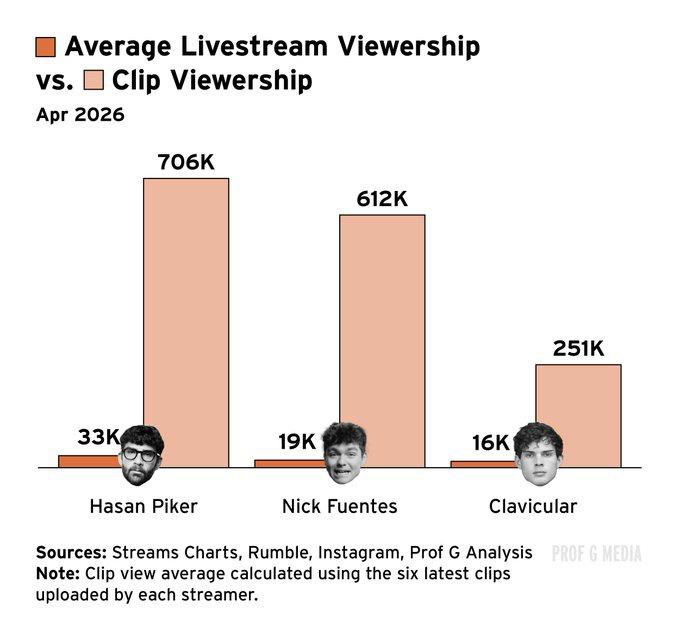
Streaming in front, clips in back: The logic of the media economy has reversed. For years, clips were the promotional scraps used to drive audiences back to the “main thing”—the podcast, the movie, the game. Today, the clip is the product. We are seeing the rise of the clip factory, where a two-hour recording session is simply the raw material for twenty TikToks and ten Reels. The long-form stream is increasingly just a reservoir for downstream fragments optimized for algorithmic feeds. This changes the creative process entirely; we are now optimizing for “clipability”—hot takes and emotional spikes—rather than sustained engagement. The stream has become a back-end production system for the feed. Prof G’s Ed Elson reports.
OnlyFans Tops $3 Billion Valuation in Advanced Stake Sale Talks: Bloomberg reports the creator platform is in discussions to sell shares at a valuation that would make it worth more than People, Inc and Ziff combined. OnlyFans paid out $5.3B to creators in 2024 and took a 20% cut. The company has no venture backing and has been profitable since year two. Bloomberg: OnlyFans tops $3 billion value in advanced stake sale talks
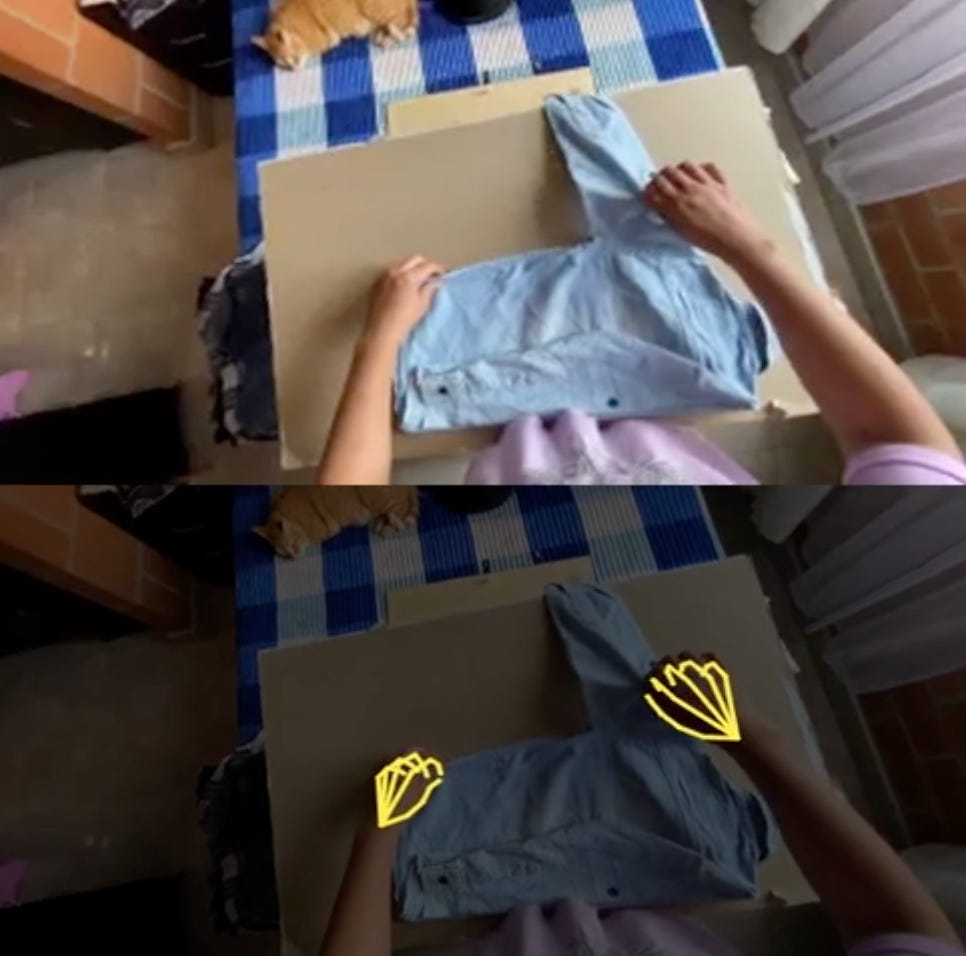
The Next Great Tech Leap May Be Built on Videos of People Folding Laundry: The Washington Post reports robotics companies are training models on mundane household task videos to teach machines physical world interaction. The approach mirrors how language models learned from text scraped across the internet. Companies are paying people to record themselves doing chores at scale, building datasets that could enable general-purpose robots. Washington Post: Robot chores video data
Events Are the New Magazines: Semafor World Economy is this week, which feels fitting because more and more media companies are quietly becoming event businesses. The website is the marketing. The newsletter is the lead generation. The actual business is getting powerful people into a room and charging sponsors to stand near them.
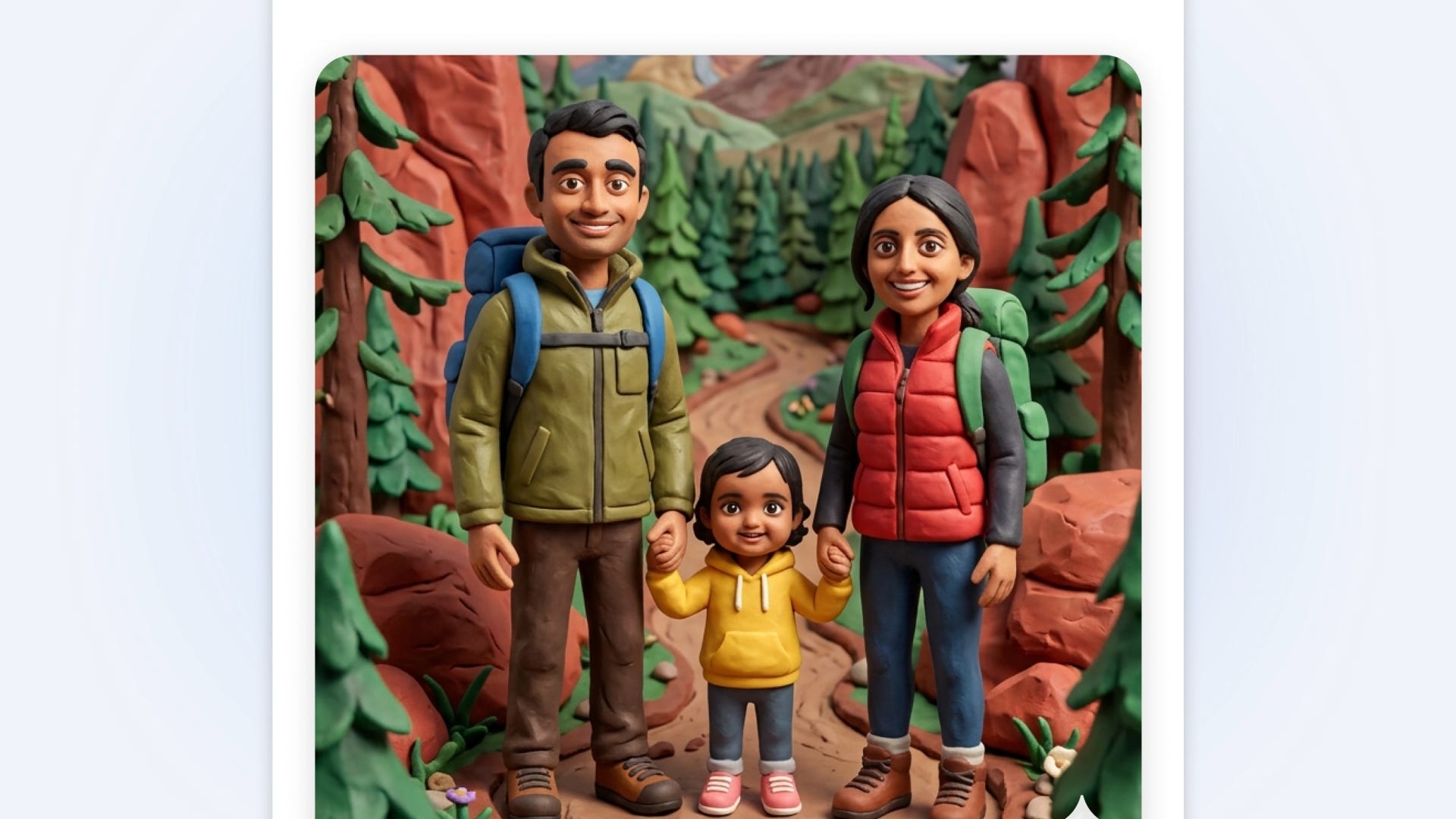
Google Turned 20 Years of Data Collection Into a Product Moat OpenAI Can’t Replicate: Nano Banana generated over 5 billion images in its first two months after launching in August 2025. The figurine-style trend started in India and spread globally. Gemini now integrates with users’ photo libraries to personalize image generation, using Google’s consumer data advantage to differentiate against Midjourney and DALL-E. X: Google Nano Banana data moat
Box CEO Aaron Levie Says AI Agents Take Real Work to Set Up at Company Scale: The observation points to a growing role for forward-deployed engineers and professional services in AI implementation. Enterprises assumed agents would deploy like SaaS; instead they’re discovering agents require custom workflow integration similar to RPA deployments. The gap between demo and production is widening, not closing. X: AI Agent Implementation in Enterprise
Allbirds Pivots to AI Compute; Stock Pumps 500%+: Wired reports the shoe company announced it would focus on AI infrastructure instead of footwear. Myseum shares doubled after the social media firm pivoted to AI. The market is rewarding any company that adds AI to its business description regardless of execution capability or business model coherence. The next stock pop will come when GameStop starts selling ugly wool shoes. Bloomberg: Allbirds Is Pivoting to AI Compute. Sure, Why Not | CNBC: Another Absurd AI Pivot Is Propelling a New Stock Higher Thursday
Anthropic CEO Dario Amodei Set to Meet With White House Chief of Staff Susie Wiles on Friday: Axios reports the meeting represents a breakthrough in Anthropic’s effort to resolve its fight with the Pentagon. The company released Mythos Preview to enterprise customers days ago but has faced pressure from the Defense Department over access to classified deployments. Google announced a similar Pentagon AI deal this week after years of avoiding military contracts. Axios: Anthropic Trump administration Mythos
Google Is Negotiating a Deal With the US DOD That Would Let the Pentagon Deploy Gemini AI Models in Classified Settings, Reversing Its Previous Stance: The Information reports the deal would end Google’s years-long withdrawal from military contracts after employee protests over Project Maven. Google walked away from defense work in 2018; now it’s competing with Anthropic and Palantir for classified government contracts. The company that wouldn’t help identify drone targets is now bidding to put AI into classified Pentagon systems. The Information: Google, Pentagon Discuss Classified AI Deal as Company Rebuilds Military Ties
OpenAI Updates Codex Desktop App With Computer Control, In-App Browser, Image Generation, Automation Memory, and Plugin Support: I can’t wait to try. This is the real battle. The update turns Codex from a coding assistant into an operating environment. Users can now control their computer, browse the web, generate images, and chain automations without leaving the app. OpenAI is building the interface layer between AI and desktop computing before Apple or Microsoft can. ZDNET: OpenAI Updates Its Codex Desktop App With Features Like Computer Control
YouTube Now Lets Users Turn Off Shorts: The Verge reports users can limit Shorts to zero minutes per day, effectively removing them from the app. YouTube built Shorts to compete with TikTok; now it’s letting users opt out entirely. The feature acknowledges that algorithmic short-form video isn’t universally wanted, even by YouTube’s core audience. I totally support this FWIW. Deadline: YouTube Now Lets You Turn Off Shorts
Lovable Is Valued at $6.6B and Just Made It Possible to Launch a Paid Product in One Conversation: Every vibe coding tool can generate a landing page — Replit, Bolt, Cursor, V0. Lovable automated payments, hosting, and deployment, turning code generation into product launch. The company is valued higher than most SaaS companies because it eliminated the gap between prototype and revenue. Such a good move. Everyone wants to get to a transaction. The Atlantic: Lovable Platform Strategy
GOOD PRODUCT

Elle Fanning is terrific at capturing that specific, terrifying moment when life changes overnight. Nick Offerman, Greg Kinnear and Michelle Pfeiffer round out a good cast. Margo's Got Money Problems brought back memories. Watch on Apple TV.
Will you be licensing the PIMP machine and the whole recursive loop of tools you've coded on top of it? The PIMP would be a consumer success, and the others could be huge commercial winners at the media and enterprise level. I'm ready to buy them!
Would it be possible to do a financial analysis of the clips? How much are these contributing to the bottom line for these folks?
Secondly, I think it’s just a little off to say the clips are the end game. I think known authority is the end game, some version of fame mixed with credibility at scale that can open doors for real power, money, and influence. The clips supercharge exposure and notoriety, they are the key. But they aren’t the end game in and of themselves.