


Greetings travelers…
The lineups at the Uffizi in Florence are long, overflowing with Americans. It may be a bad time to travel as one, but everyone loves their money. The Italians are used to accommodating the Yankee hordes and remain gracious hosts. They too have tolerated divisive governments.

At the Uffizi, nobody is crowded around the Caravaggios. Botticelli is less physiologically confrontational. He has the better brand. The crowds are ten deep around The Birth of Venus, cell phones raised, shoplifting history. Americans save violent realism for cinema and politics.

I am far happier to linger in the dark Caravaggio gallery. Bacchus, the Roman god of wine, offers us a taste with pale skin and dirty fingernails. An ancient Dirk Diggler. It is exquisite. As is The Sacrifice of Isaac that hangs nearby. Suspended violence. A test of faith.

AI seems far from the minds of the Florentines. Besides, Italians will need far better cell service if they are going to reach the singularity. In retrospect, we should have been far more wary of the iPhone which has turned tourists into zombies and jammed Instagram famous sandwich shops with hungry, slave-like revelers. The smartphone collapsed the distance between people and the network. Eventually it made the network feel more real than the world itself.
As Brian and Alex are keen to remind me on the podcast, people hate AI. At least that’s what the surveys say. Humanity graduates booed a mention of the technology at a commencement ceremony in Florida last week. Of course they hate something that people are telling them will take their jobs, their agency.
But what if AI is actually the ultimate emancipator? It has the potential to break our addictive tether to the screen and place a renewed premium on our humanity. This is not inconceivable. This week, Mira Murati’s new startup, Thinking Machines, showed us one way to keep the human in the loop (see below). Remember, in a world of artificial abundance, human scarcity is the only thing that gets repriced upward.
Renaissance intellectuals were ancient pioneers in modeling the human experience. AI is just another step in our long journey to understand consciousness. I remain in awe of its ability to empower a curious mind and optimistic in our long-term ability to absorb its disruptive fallout.

Pod 183: Clauditis
Out FRIDAY 6 AM EST Apple | Spotify | Substack
AI is less popular than ICE and getting booed at college graduations. Meanwhile, Anthropic is on a $50 billion run rate and raising at a $900b valuation. We look back to the dawn of the assembly line, when workers suffered from “Forditis,” a condition of despair caused by a lack of agency and the pressure to keep up with a pace set by machines. Plus: learning from Ferrari, Ryan Cohen’s use of the information space for his long-shot takeover bid for eBay, the decline of drinking as structural phenomenon, the end of the road for BuzzFeed, and Italian rock bands.
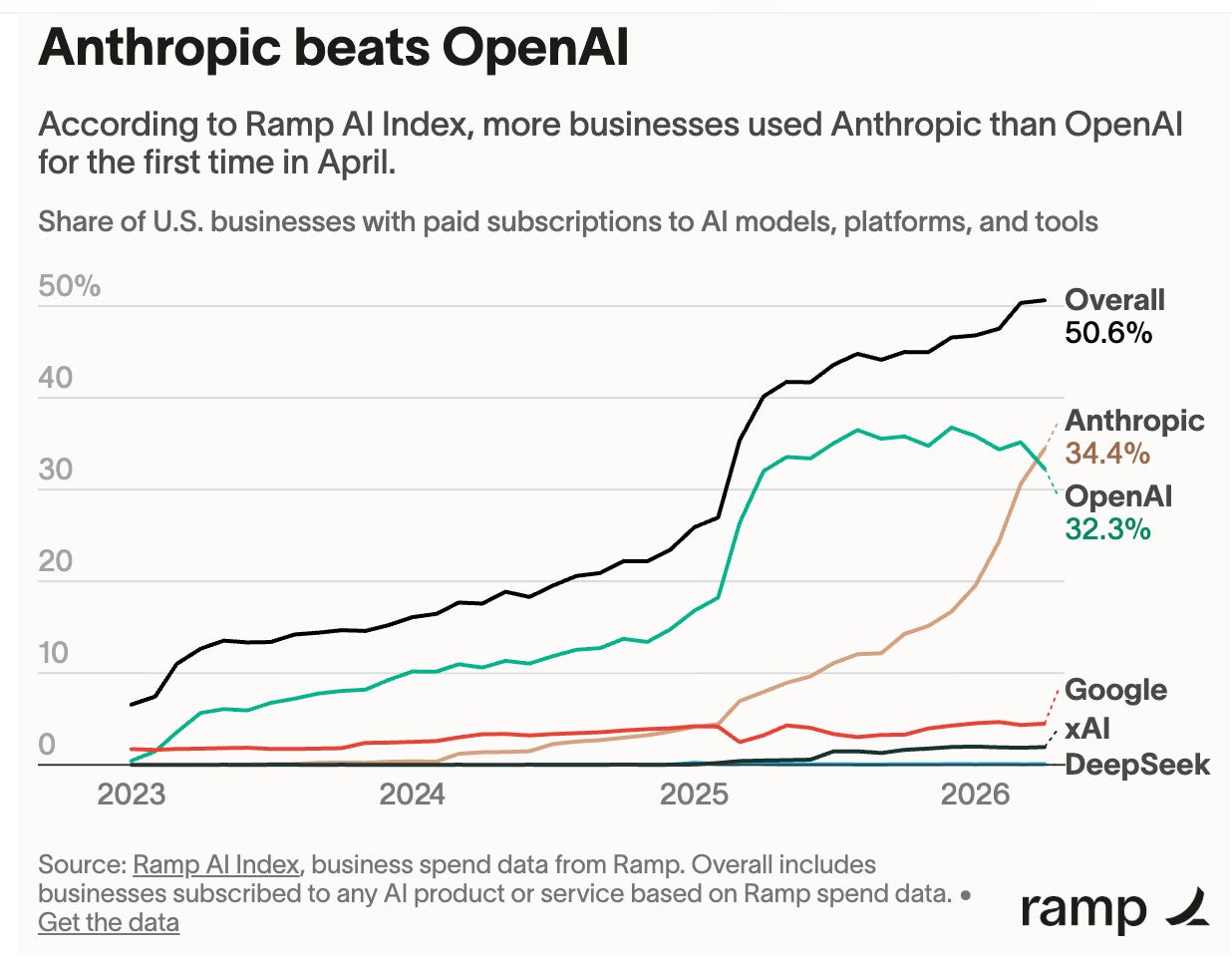
Anthropic has emerged as unlikely front-runner in AI by side-stepping the consumer race. While OpenAI chased mass adoption through ChatGPT and an expanding universe of products, Anthropic focused heavily on enterprise workflows and high-end coding tools. The strategy appears to be working: according to the Wall Street Journal, the company’s revenue run-rate reportedly exploded from $9 billion at the end of 2025 to a projected a mind-boggling $50 billion by mid-2026, with investment offers now valuing the company north of $900 billion. 🔗 Anthropic Was Behind. Now It’s the AI Boom’s Front-Runner
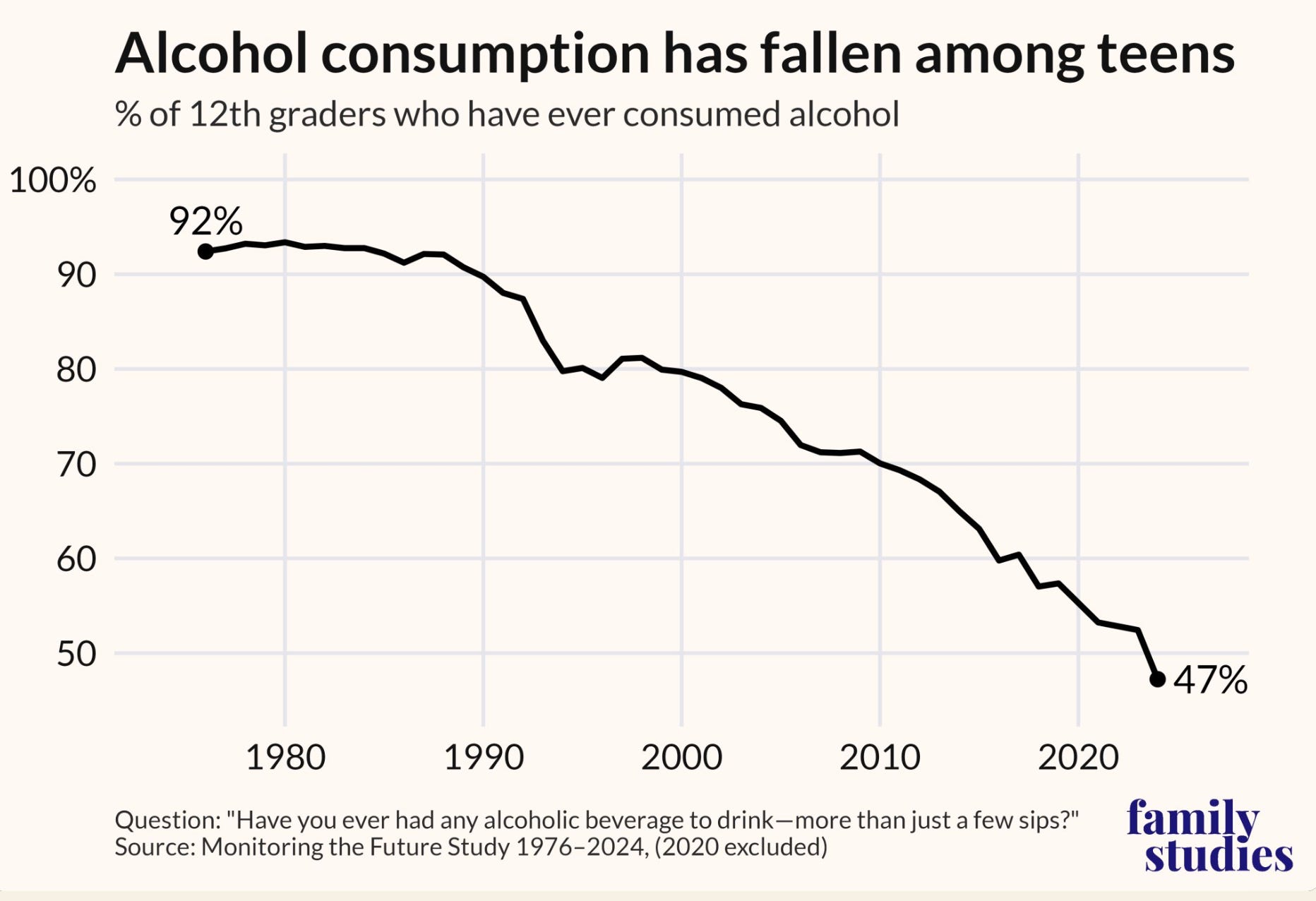
The collapse in youth drinking increasingly looks structural, not cyclical. Survey data shows alcohol use among 12th graders has fallen from roughly 90% in prior generations to under 50% today. Gummies, wellness culture, self-optimization, and the general desire to avoid feeling awful in the morning are all reshaping social behavior.
Hacky sack represents the opposite of optimized life. It is social, pointless, repetitive, physical, and impossible to scale. No feeds. No monetization. No metrics. Just buzzed people standing in a circle wasting time together. A surprising amount of 90s culture now feels emotionally restorative because it came before everything became algorithmically optimized. 🔗 This ‘90s stoner trend is now the latest Gen Z obsession: the hacky sack
Ferrari has made just 330,000 cars in its entire history. GM sells that many in weeks. Ferrari is less a car company than a mythology machine built on obsession, genius, danger and glory. The business originally existed to fund racing. Today it behaves more like a sports franchise crossed with a luxury maison. 🔗 Acquired Podcast: The Prancing Horse and the Business of Desire
Mira Murati’s new startup, Thinking Machines, hints at the next phase of AI: ambient computing. Less chatbot, more cognitive layer. The AI becomes a collaborator, producer, editor, observer, and companion process that sits alongside your work instead of waiting for prompts. The race may no longer be about the “best model,” but the best interface for working with intelligence itself. 🔗 Interaction Models: A Scalable Approach to Human-AI Collaboration
Ryan Cohen’s attempted eBay takeover feels less like traditional activist investing and more like internet populism. Open letters, CNBC appearances, trolling on X, and attacks on executive pay are all part of the strategy. Cohen understands retail investor psychology, internet culture, and the power of narrative warfare. 🔗 The Hollow Men
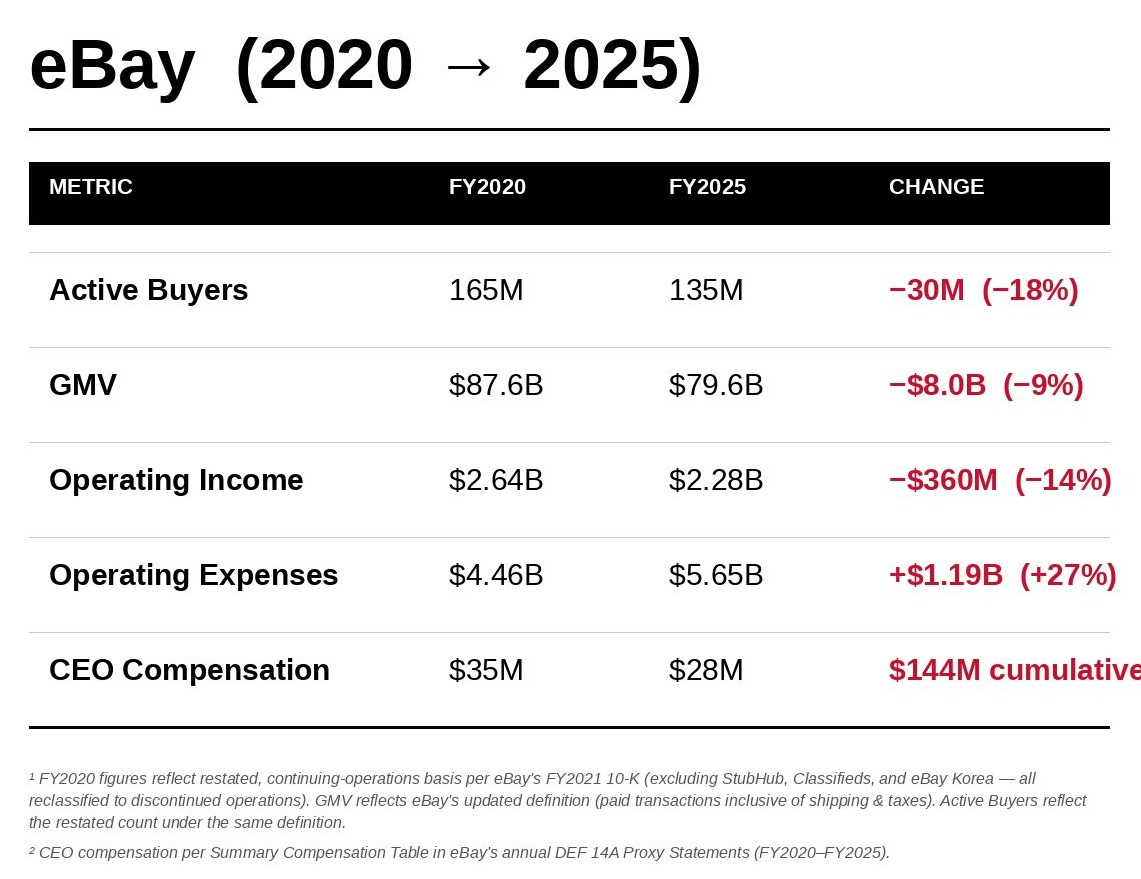
You can never regulate truth into the networks. Unless you are the Chinese government. Their truth. Move there you might like it better.
Troy - I appreciate you very much but you really should look at some data about attitudes toward AI. It is the one issue people on the left and right agree on in the US. You sound out of touch and like you are high on your own supply. Please, read a range of survey data on this topic!