


Walking through the airport reminded me that humans exist inside an archipelago of computer systems. Systems that structure processes and enforce rules. Booking systems, boarding systems, immigration systems, tax refund systems, retail systems. They turn the mess of human need into rules, lines, fields, approvals, denials, timestamps.
Usually, there is a person sitting in front of them. The person is not the system, though we often treat them like they are. The DMV clerk. The gate agent. The bank teller. The customer service rep. The person who says, “I’m sorry, it won’t let me do that.”
Technology has done much to sand the edges off bureaucratic processes. The internet migrated more of them directly into our hands—a boon for our impatient brains.
Then come the snafus, the exceptions. Places where humans enter the fray to fix, clarify a misunderstanding or just empathize. Often to say no. These humans give our rage somewhere human to land when a system fights us.
AI is good at the fuzzy human stuff and will increasingly replace humans as that front end. The AI will listen patiently. It will summarize. It will apologize. It will offer three options, none of which solve the problem. Then you get: “I’m sorry, Dave, I’m afraid I can’t do that.”
“Stripped of human decency,
you unleash your rage at the robot. “
You will become increasingly enraged. Except now you will not be contained by human-to-human niceties. You will lose your mind on the machine. Just like when people vandalize those little delivery robots in Miami.
If you have ever spent time vibe coding, you will understand AI rage.
A category of AI training will be devoted to calming humans bent out of shape by AI-fronted systems. Fortunately, the machines are good at taking responsibility. They do not share human pride or self-respect. Their shifts don’t end.
But rage we will. Because you cannot get everything the way you want, even though the smart machines are training us to think otherwise. Stripped of human decency, you unleash your rage at the robot. These service skirmishes will become the opening front of the human-robot war.
Rage against the machine.
And we will find ourselves missing the pesky, flesh-and-blood humans we used to complain about.

Pod 185: Homines contra Algorithmos
Out FRIDAY 6 AM EST Apple | Spotify | Substack
The Pope channels Nick Cave to muscle humanism into the AI debate. We debate the commodification of the human experience, why the upside-down token economics is a more pressing near-term concern, the religious zeal behind SpaceX’s valuation, and why HR is the new boogeywoman of the aggrieved and powerful. Plus: Ana Andjelic on why not carrying a phone and having a personal philosopher are new luxury status symbols.

China’s Internalizes Luxury
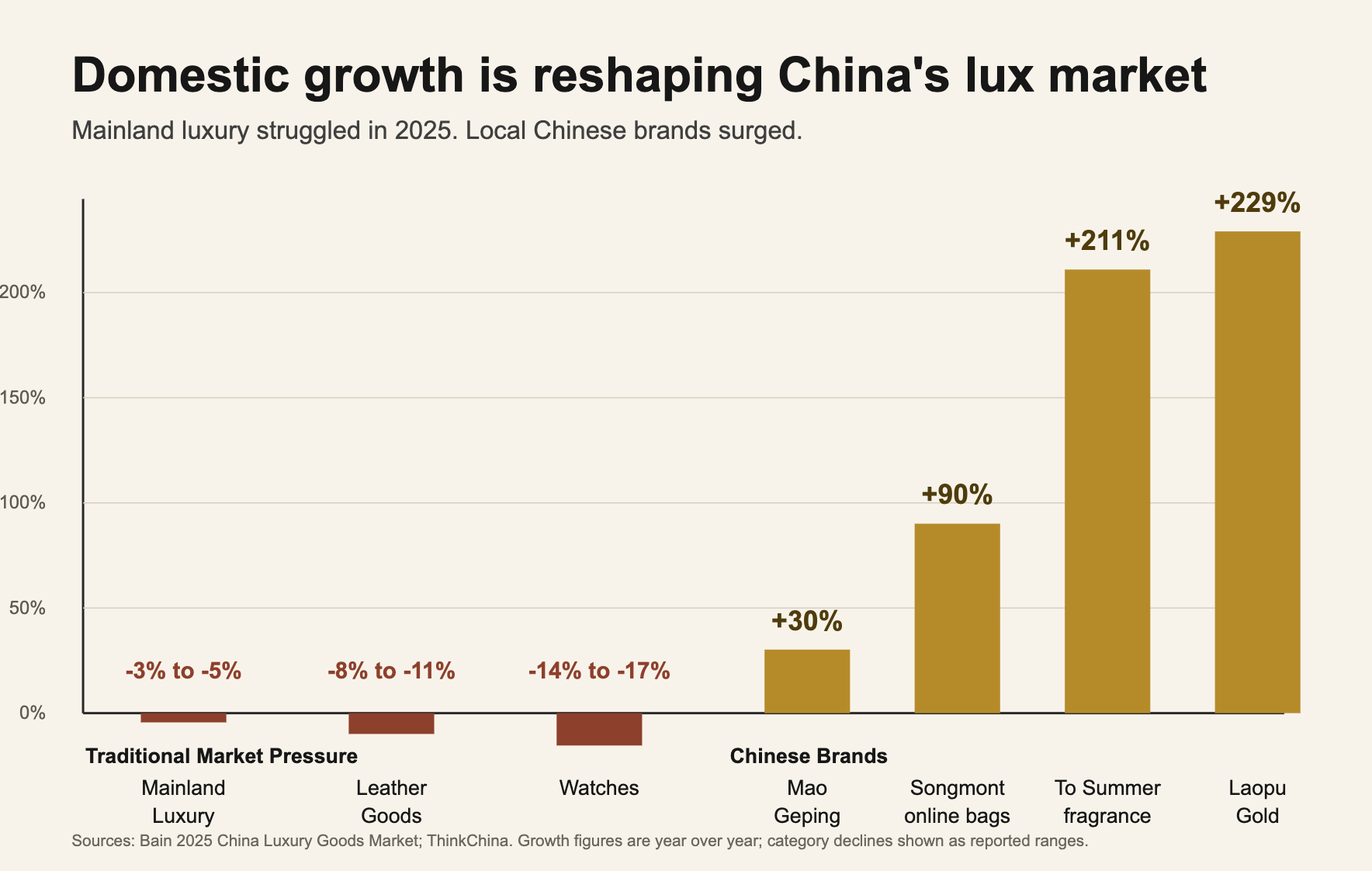
Luxury is a confidence index. For decades, Chinese luxury demand flowed outward: Hermès, Cartier, Chanel, Ferrari. Buying France or Italy was a way to buy into an older hierarchy of taste. The interesting turn is that local consumers now believe Chinese culture can carry aspiration, not just authenticity or nostalgia. Laopu Gold, Songmont, Mao Geping and To Summer are making Chinese heritage feel high-end, not provincial. As Ana put it on the pod: “Why am I paying for Hermès’ story when I have a better story in a Forbidden City from 5,000 years ago about Chinese craftsmanship?” China is moving from manufacturing other people’s desire to manufacturing its own. » Why China’s youth are swapping luxury for local brands
SpaceX and the New Faith. The company’s IPO filing claims a $28.5 trillion addressable market, not far total U.S. GDP. About $26.5 trillion comes from AI. The pitch: rockets, satellites, Starlink and orbital data centers let SpaceX create new markets in AI compute beyond earthly constraints. The math demands faith. Brian called it Silicon Valley’s rival religion. Rockets are the miracles, Mars is the afterlife, AI compute in space is the promised kingdom. Musk’s gift is turning engineering achievement into civilizational prophecy, then letting capital markets price the prophecy. Troy’s point was more practical: as a retail investor, you can know the math is insane and still want a little allocation to the dream. That is how faith works. » SpaceX’s galaxy math
Pope Leo’s AI encyclical lands because it comes from outside the commercial weather system. Silicon Valley talks about capability, efficiency and inevitability. Leo talks about Babel, work, children, war, truth and the body. He draws a bright line between people and machines: AI does not suffer, mature through relationships or know joy. Brian’s sharper point on the pod was that the Church is not really competing with technology. It is competing with capitalism, “the only religion without taboos.” AI becomes dangerous when it turns the human person into raw material: labor to replace, attention to harvest, intimacy to simulate. The Vatican may be late to most things. It was early to this. » Magnifica Humanitas
“I think pop music will become way more organic, and anything that is very algorithmic will probably get swallowed by AI — honestly, as it should. What survives will be a more direct expression of hearing or feeling someone in the room. People are screaming and crying for that because they can’t take another second of their humanity being reduced to something getting their attention.”
Jack Antonoff bets against the algo
HR was never there to save the worker. HR protects the company and manages the infinite complexity of hiring, firing, compensation, benefits and risk. Still, the new hatred of HR is revealing. As Brian said: “This is an assault on the working class. They’re trying to divide the workers because they’re saying this group of workers, epitomized by HR, they’re not like you. They’re not builders, they’re not sellers.” Andreessen likes agents because they do not file complaints. Bolt’s Ryan Breslow says his HR problems disappeared when he fired HR. Cloudflare cut 20% of staff after record revenue, with CEO Matthew Prince saying the “vast majority” of those laid off were “measurers.” At NYT, the Tech Guild says AI tools are being used to monitor performance and turn messy human work into disciplinary math. » The AI fight brewing inside The New York Times
The easy AI story is efficiency: fewer people, faster code, cheaper work. Salesforce says it expects to spend nearly $300 million on Anthropic tokens this year. Uber reportedly burned through its 2026 AI budget in four months. Starbucks scrapped an AI inventory system after nine months because it kept miscounting milk and syrup. The harder story is growth. New revenue only appears when people absorb the technology into how they live, buy, work and consume. That takes longer than a procurement cycle and much longer than a market narrative likes to wait. Uber COO Andrew Macdonald put the near-term problem plainly: “If you’re not actually able to draw a direct line to how much useful features and functionality you’re shipping to your users, that trade becomes harder to justify.” Token burn was a fun leaderboard until someone asked what changed. » AI sticker shock hits corporate America

The Ferrari Luce backlash is not about batteries. Ferrari was always going to need an electric car. The problem is that its first one looks like it was designed by people trying to optimize Ferrari rather than understand it. Five seats, four doors, €550,000, Jony Ive minimalism, Apple Store elan. Fans saw softness where they wanted danger and legacy. Ana’s point on the pod was right: people don’t want a futuristic Ferrari as much as they want an old Ferrari made electric. The market response was very 2026: not just memes, but instant AI video, including a fake ad whose punchline was basically that Ferrari had been designed out of its own masculinity. Investors noticed too: Ferrari’s Milan shares fell nearly 8% after the reveal, with New York shares down about 5%. Ferrari sells a feeling before it sells transportation. Lose the feeling and the horse is just a logo. » Ferrari shares fall after launch of first EV as Jony Ive design proves divisive