


ON THE PODCAST: HATING THE PLAYER AND THE GAME
OpenAI’s Sam Altman is doing Sam Altman things by sneaking in to win a Pentagon deal after Anthropic’s Dario Amodei stood his ground. Block’s 40% employee purge says more about Jack Dorsey’s CEO skills than AI. David Zaslav gets only a PE golf clap for making Warner Bros shareholders money. McDonald’s CEO becomes a symbol of out-of-touch financializers. But hope is on the way as Cal AI’s teenage founders bootstrapped their way to riches.
Out FRIDAY 6 AM EST Apple | Spotify | Substack
STARTING POSITION:
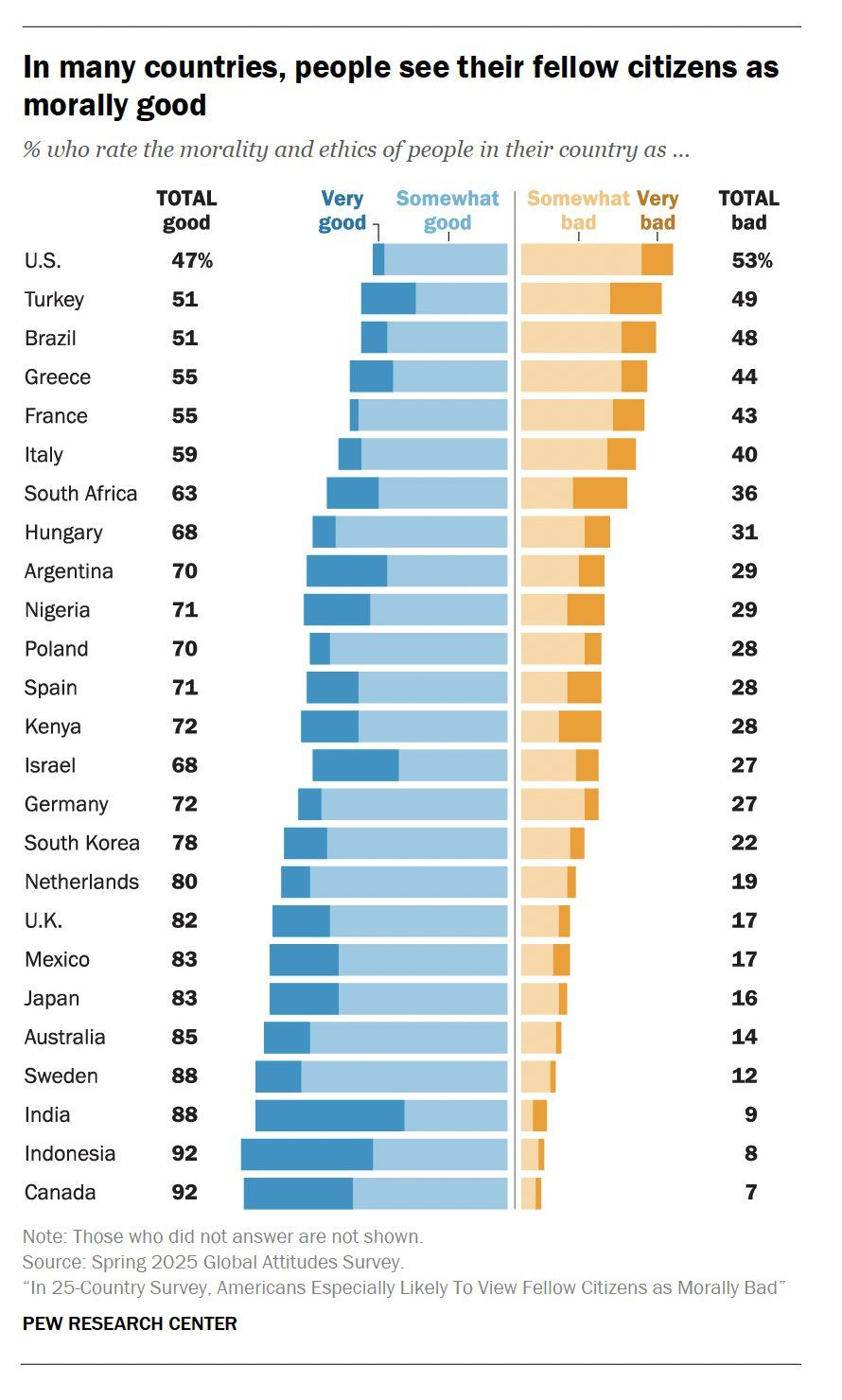
Brooks’ take: Outgoing NYT Opinion columnist David Brooks reflects on how “moral ruination” in America paved the way for Trump.
“What the hell happened to us? ... I think there was a moral ruination, a loss of moral knowledge that preceded Donald Trump’s arrival on the scene. For all of American history, we had some sense of a shared moral order... [but] over the last 50 years, in my view, we’ve privatized morality. We said there are no shared moral values. There’s no ultimate truth. But everybody gets to come up with their own values.”
FROM THE FEED
Zaslav, McDonald’s, and the CEO performance question
David Zaslav gets a PE golf clap for engineering the Warner sale to Paramount. The stock sat at $7 before the process and hit $31 by the end—Zaz will make out like a bandit. Bill Simmons and Matt Belloni took shots at his estimated $600M payday. Don’t hate the player, guys. Nobody questioned Simmons’ take selling the Ringer to Spotify.
Meanwhile, the McDonald’s CEO became a symbol of the out-of-touch financializer class, calling the Big Arch “a product,” taking an awkward bite on camera with full BCG energy. The real question: does a CEO need to be a performer now, or do people just want leaders who are actually into what they do? The tide keeps turning against the managerial class.
Dario is winning
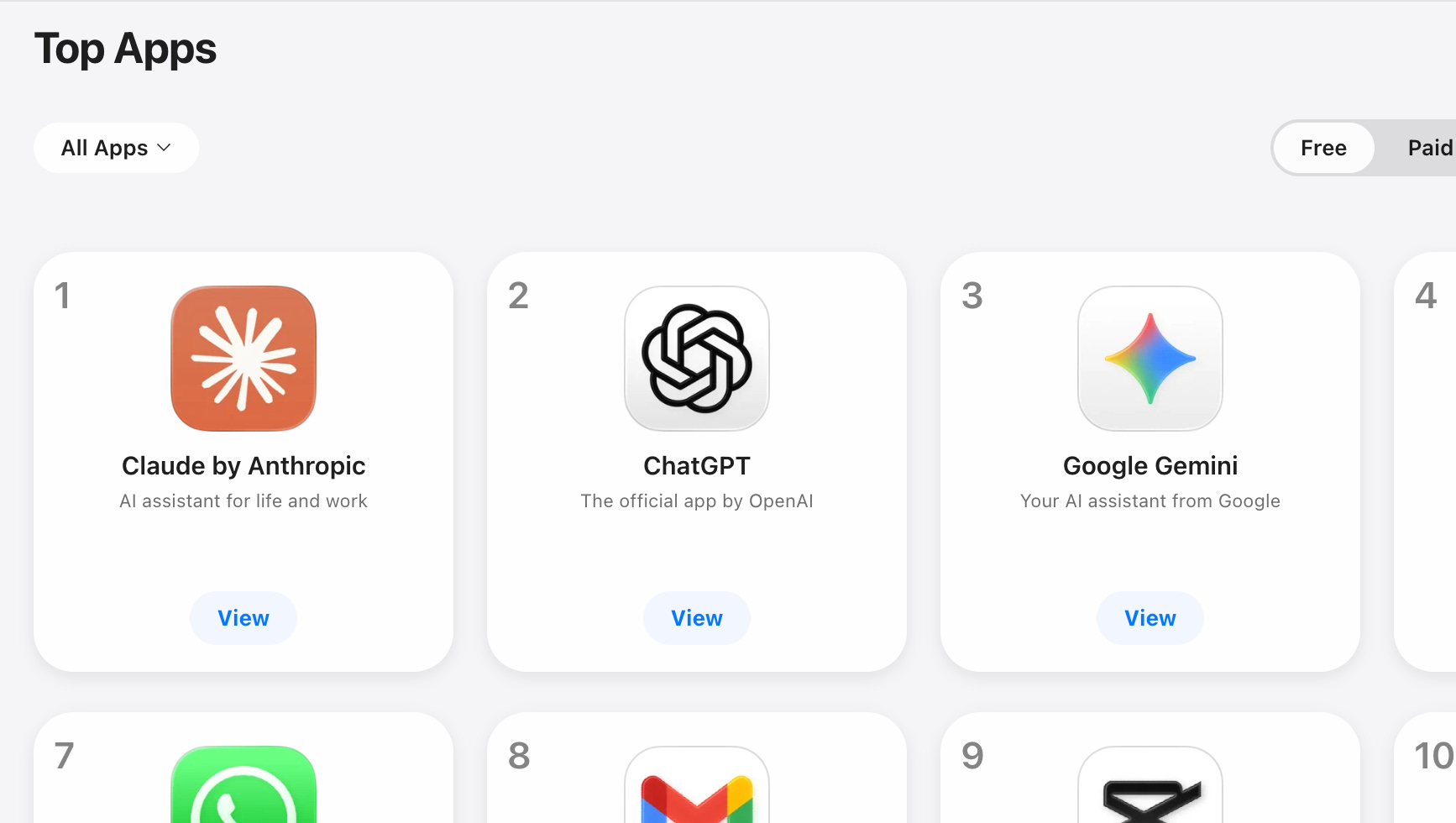
Dario lost a $200m contract but built the brand. As Claude climbs the download charts, it’s clear people crave principled leaders in an era of pusillanimous autists. Turns out, ethics is elite marketing. Anthropic’s statement on the comments from Secretary of War Pete Hegseth
The rise of the Taste Guy
Tech has discovered that the last moat is taste. Chris Black, Colin Nagy, Tyler Brulé, Will Welch, Rick Rubin — these are Taste Guys. Zuckerberg wants some too and showed up at Milan Fashion Week to earn the bonafides. It may not be as easy as learning Mandarin. Taste isn’t a skill you optimize for; it’s accumulated judgment that resists systematization. Also, Claude has become AI for Taste Guys.
Paul Graham wrote about the “Brand Age” — which is sorta obvious, but he packages the obvious well. The irony: tech people keep making “discoveries” that are blindingly obvious to people in creative fields, then lament how outsiders are naive about tech.
Covering war in a post-institutional world
Following the Iran conflict on X versus the New York Times produces completely different realities. X’s new topic-filtering feature surfaces an overwhelmingly anti-war consensus — skeptical of the objectives, the execution, the competence. The NYT, as institutional media does, lines up behind institutions: couching, hedging, waiting. The real divide isn’t left vs. right. It’s institutional vs. feral.
It’s hard to find a decent way to track the war. We used to turn to CNN. Our internet attention span has made the TV news format hard to watch, that and CNN is just largely unwatchable. The BBC is more tolerable. There are lots of options but you have to do the work. Fortunately, Drudge is still aggregating. New Items is too. Reddit pulls sources from everywhere with community context. What’s missing is that effortless modern news spinal cord — a source with reliable velocity, continuity of coverage and point of view in a timeline that helps you understand what matters right now.
The Great AI Excuse
Block’s 40% layoff sent the stock popping, papering over years of mismanagement with a convenient AI narrative. Reports of a $68M on a company offsite while the business stalled suggest the "bloat" wasn't just technical. Jack Dorsey has been a questionable leader for a decade; AI simply gave him the permission structure to finally cut.

Robots need rights (or at least better manners)
Coco delivery robots are getting more confident — weaving between pedestrians, darting across sidewalks. They’re no longer piloted from the Philippines; they’re increasingly autonomous. Learning to live with robots is going to be messy. They will eventually need a category of rights. The Coco robot is also an ad network waiting to happen — this is where it always goes.
The bootstrapped prodigy exit
Cal AI — a calorie-tracking app built by teenagers who got rejected from every Ivy League school — grew to $40M ARR in 18 months and got acquired by MyFitnessPal. They bootstrapped it. No Y Combinator, no trips to Garry Tan’s sauna. The app uses AI to photograph food and instantly assess calories — solving the brutal friction of manual entry that plagued MyFitnessPal. Francisco Partners had bought MyFitnessPal from Under Armour, optimized it, and was printing money until these kids showed up and threatened the whole thing. The story: AI is lowering the barrier to entry so fast that teenagers can build $40M businesses before finishing high school.
The trafficopalypse and the death of page views
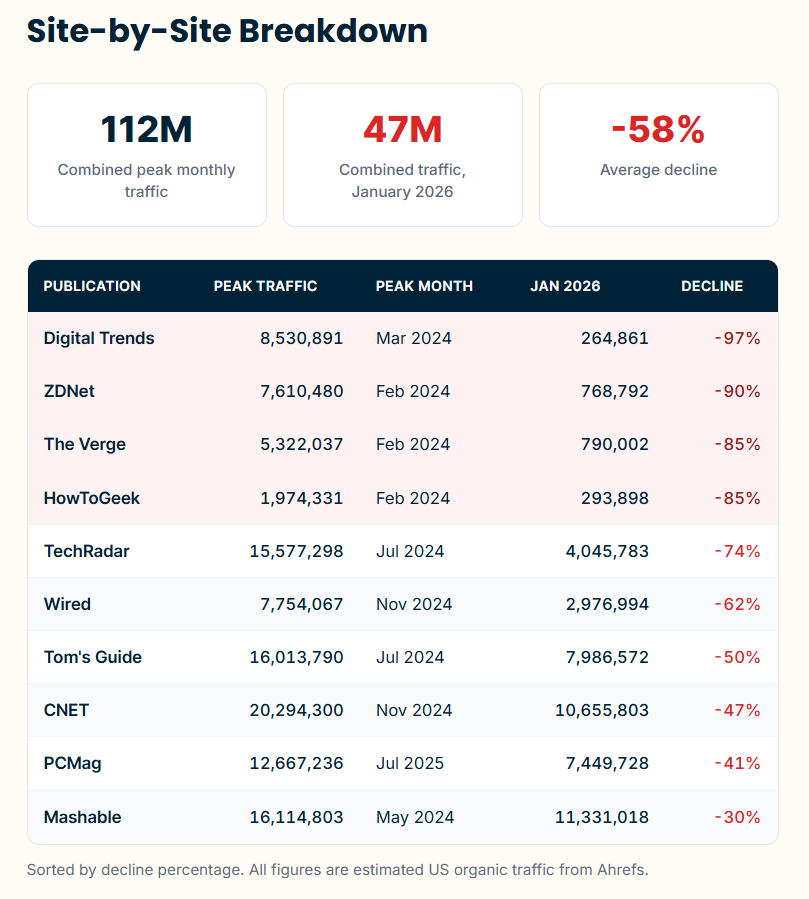
Ahrefs data on tech news site traffic is brutal: ZDNet down 90%, Digital Trends down 97%, TechRadar down 74%, CNET down 47%, PCMag down 41%, Mashable down 30%. Taboola’s CEO says Google wants search to die and will make more money from Gemini. Condé Nast’s Roger Lynch is fully on board with Google Zero — they don’t believe search traffic will be a meaningful part of their business going forward. The page view model is circling the drain. Meanwhile, Ziff Davis pulled off a magic trick: sold its Ookla data segment (speed test + B2B network tools) to Accenture for $1.2B — more than the market cap of the entire company. Stock popped 78%. The lesson: the value is in the data and the B2B utility, not the content pages.
1990s nostalgia
The FX series Love Story (about JFK Jr.) is bringing back pre-cellphone downtown New York — Tribeca, the Odeon, Bubby’s, Lucky Strike, riding bikes without looking at a phone. The music: Mazzy Star, Seal, Divinyls, Crowded House, Lenny Kravitz, Cranberries. The fashion: atrocious (JFK Jr. could pull it off, nobody else could). The Bill and Hillary deposition scenes are a reminder that Bill was a dog and Hillary is devastatingly competent in adversarial settings vs. her discomfort as a politician. SXSW is next week, and there’s nostalgia for when tech was fun — the GroupMe grilled cheese truck, Foursquare vs. Gowalla chalk battles in Austin. Now it’s all War Claude and defense tech. We miss when the biggest controversy was whether the sharing economy was regulatory arbitrage.

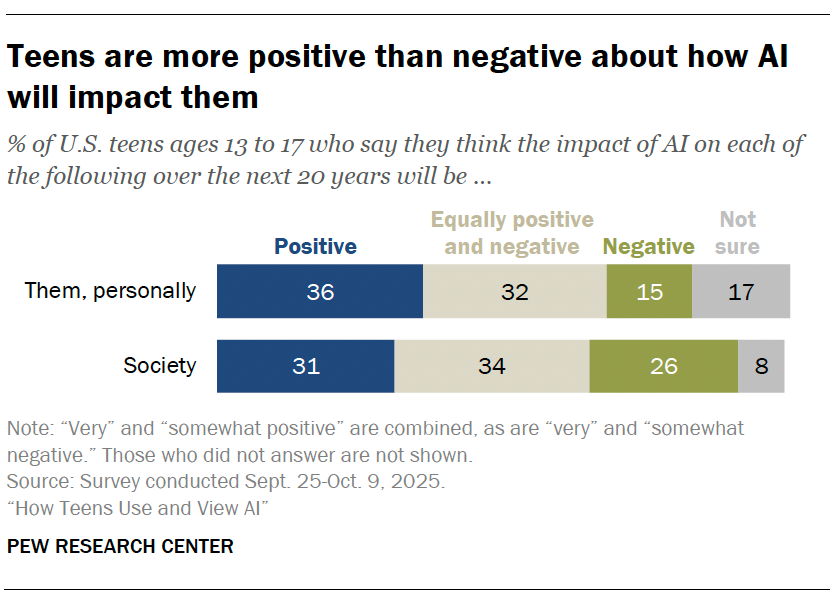
Teens are more optimistic about AI than you’d think
Pew Research data on how teens use and view AI came in more positive than expected. The generational pattern holds: Gen X was comfortable with the internet, Millennials with social media, Gen Z with AI. Meanwhile, a Gemini AI wrongful death lawsuit hit the news — a reminder that the stakes of getting this wrong are not abstract.
Metrics make us miserable
Derek Thompson’s conversation with a philosopher on why metrics screw everything up. We love to hit a number, but the number often obscures or actively undermines the actual purpose. The war on enshittification is an elite phenomenon but hard to dismiss as groundless — many things genuinely used to be better. Focusing entirely on metrics allowed an army of mediocre product managers to succeed at tech companies: throw everything at the wall, ship when the number in the spreadsheet is green.
Prediction markets hit a wall
Kalshi voided bets on Khamenei’s death during the Iran conflict — changing the rules mid-game. The insider trading problem is real and harder to police than in public equities, where everyone can run analysis and post patterns to Twitter and Reddit. Prediction markets are still the most interesting new information mechanism, but the governance is nowhere near ready for real geopolitical stakes.
Apple’s MacBook Neo: Making cheap feel premium
Apple’s new MacBook Neo is a masterclass in product marketing — making a discount product not feel like one. The launch video is whimsical and informational at the same time. After a rough stretch (the iPad crushing instruments ad, the AI ads, the rotating phone materials nonsense), this is the best work they’ve done in years. Old school Apple: both whimsy and impact.
GOOD PRODUCT
Improvisational orchestra meets the algo
The algo had an inkling and dumped me into the “improvisational orchestration segment,” delivering something unexpected and wonderful from late last year. I don’t know English musical prodigy Jacob Collier but it was fun to jump into his world for a while. Here’s he is conducting the San Francisco Orchestra like it’s GarageBand — pulling in different sections, giving them harmonies in real time, getting the audience to participate. A commenter said it was the most moving concert she had seen in 71 years. The algo followed up with Ben Folds also doing something cool at the Kennedy Center. This is where YouTube is impossible to compete with.
Like the links? Think we could do better? Let us know!