


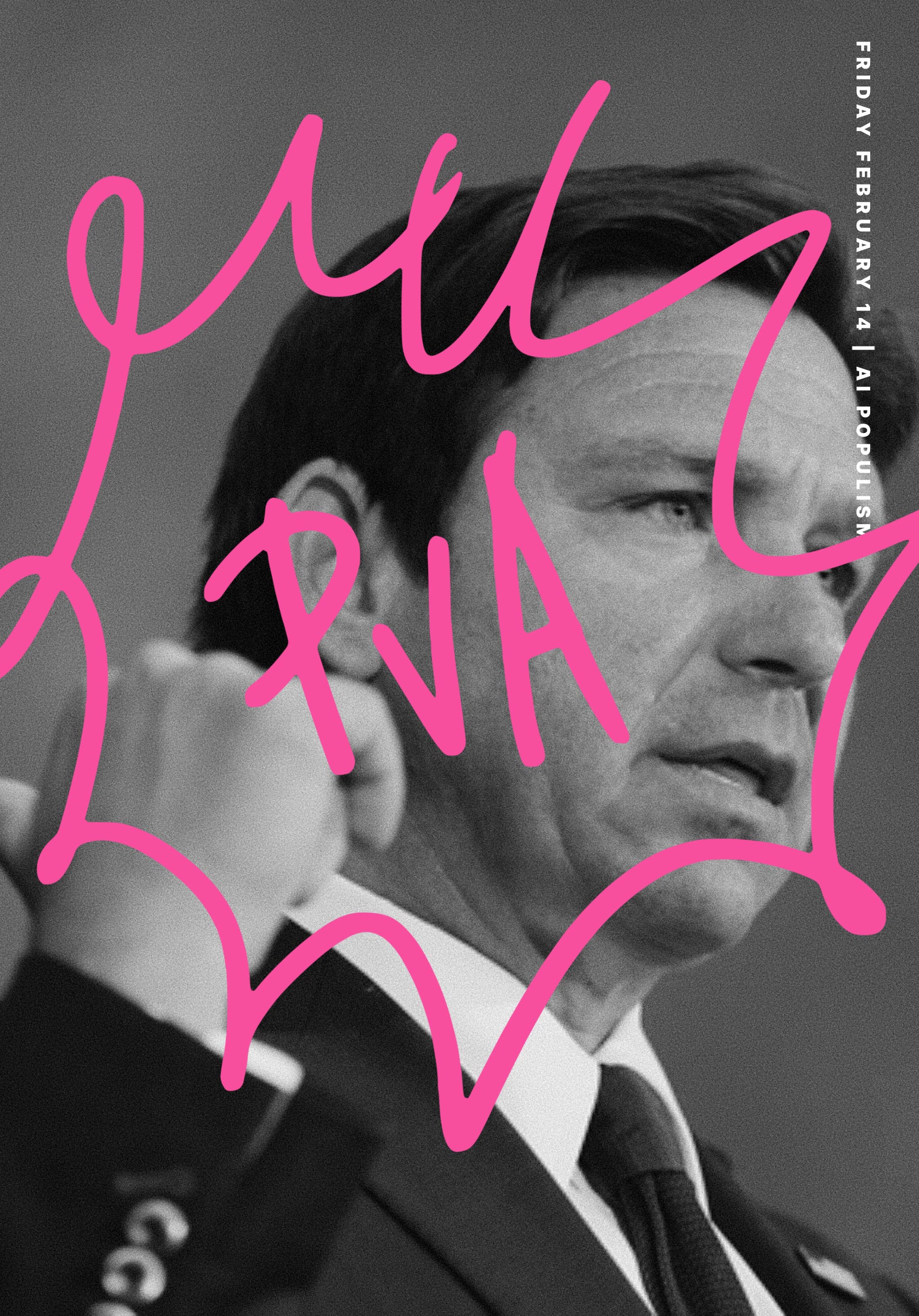
POD 170: AI Anxiety
The age of AI is off to a shambolic start. Anthropic and OpenAI ran Super Bowl ads that fell flat. The gap is widening between the AI-pilled true believers and the Normals, as AI becomes yet another existential anxiety. Plus: Alex breaks down the design systems deployed by Trump vs Mamdani, and Troy says The Washington Post has a product problem.
Out FRIDAY AM Apple | Spotify | Substack
TROY: I’ve been struggling with how to coach my kids…
…through the coming AI-driven economic dislocation. “Use the new tools,” “be super adaptive” or “focus on human interaction” feel like superficial bromides after digesting Matt Shumer’s viral essay, “Something Big is Happening.” His thesis: AI’s mastery of the closed loop of software development is merely the first domino. We’re entering a phase shift where those same autonomous capabilities will disrupt every high-level cognitive profession simultaneously. It’s a tough time to be planning a professional career. No wonder Americans are increasingly gloomy about the future.
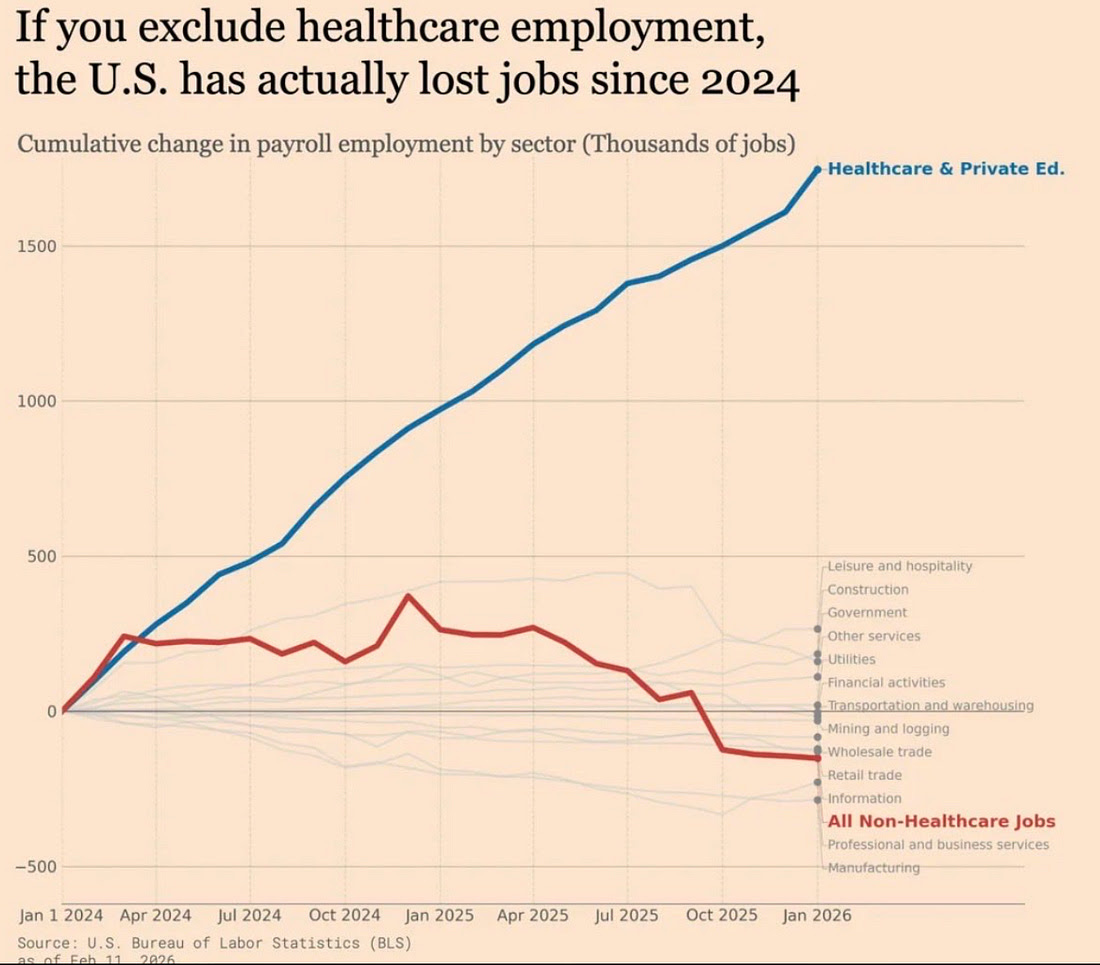
Josh Tyrangiel’s sweeping piece in The Atlantic warns that America is dangerously unprepared. While economists look to the rearview mirror of past resilience, our political and statistical institutions are too brittle and underfunded to manage — or even accurately measure — what’s coming. The historical platitude that technology always creates more jobs than it destroys is getting harder to believe. But healthcare is booming!
Related…Of the countless Dario Amodei interviews of late, his session with Ross Douthat stood out. He agrees that the unprecedented pace of change is the primary challenge, as it threatens to overwhelm society’s traditional “adaptive mechanisms,” though he thinks the diffusion of AI outside of technical realms will take longer than we think. Amodei would surely advise the next generation to move "up the ladder of responsibility" by becoming "centaurs" who manage AI systems and lean into high-level strategy and human-centric roles that require agency and persuasion.
Chris Hayes is more blunt. The unified class project for Musk, Bezos, and the tech oligarchs will do to white-collar workers what globalization and neoliberalism did to blue-collar workers.
Elon maintains that work will be optional and that’s a great thing. Nice, but not the advice I plan to give my kids.
Other stuff we covered:
1. Vogue’s Down-to-Earth Reset: New editor Chloe Malle’s first interview alongside Anna Wintour marked a generational shift. Asked about 90s budgets, Malle said she’d build a podcast studio. Asked when she last got nervous, Malle said before this interview. Wintour: “I don’t get nervous.”
2. The Billionaire Migration to Miami: Zuckerberg is buying a $150–200M estate on Indian Creek from the Jersey Mike’s founder. Sergey Brin is looking. Larry Page is already in Coconut Grove. Miami is becoming the American Dubai — tax-advantaged, gated, with private maritime security. The counter: it’s performative. Exploit California’s talent pool, bail once you’ve made it, limp back in a couple of years when you tire of Florida
3. The AI Anxiety Gap: Super Bowl Edition: AI dominated the Super Bowl ad slate but the disconnect between the AI-accelerationist internet and the general public has never been wider. The Claude ad got dinged for inaccuracies and bombed in post-game surveys. OpenAI’s ads showed aspirational metaphors, never the actual product. 71% of Americans told Reuters/Ipsos they’re worried AI will put people out of work permanently.
4. Prediction Markets as Truth Machines: Prediction markets broke out during the Super Bowl — the Bad Bunny dancer controversy generated massive betting activity. The emerging logic: insider trading in a prediction market is a direct financial incentive for accurate information. Skin in the game as the new credibility standard, versus traditional sources who leak for self-serving reasons. Gambling stocks sag after prediction markets steal the show.
5. The $2,500-an-Hour Question: Law is one step removed from coding — rules-based, somewhere between code and scripture. AI is already transforming contract analysis, document review, regulatory compliance. The top of the pyramid survives on accountability for now. But the pipeline is destroyed: the junior work that trains the next generation is exactly what AI does best. Same for consulting. Once one firm uses AI to deliver faster and cheaper, competitors face a stark choice: adopt or explain why they’re still charging a premium for human hours.
6. The Company Survival Playbook: Run all old-world costs out — customer support, coding, design, legal, finance. AI brings more competition to every industry. Find the defensible parts of your value chain and double down. Ship with small crack teams. Shorter, faster feedback loops. Brand trust matters more than ever. Throw out the hiring handbook: test for curiosity and adaptability, not narrow technical skills. The paradox per HBR: AI doesn’t reduce work, it intensifies it.
7. The Anti-AI Populist Lane: DeSantis is testing AI populism — going after data centers, positioning AI as globalization’s sequel for white-collar workers. The political math works across party lines. Bernie Sanders describes audiences booing at the mention of AI. Bannon wants the government to take a 50% stake in AI companies. Gina Raimondo calls the rush to cut jobs “a fever” and warns it could be “the end of America as we know it.” Congress is paralyzed. David Sacks oversees AI policy while holding 449 AI investments. Nick Clegg: “If democratic governments drift into this period... democracy is not going to pass this test with flying colors.” Gallup: optimism about the future at 59.2%, lowest since measurement began.
8. MAGA Design - Government Gets a Makeover: Joe Gebbia is redesigning federal websites as the nation’s first chief design officer. TrumpRx looks like Hims for government — clean, millennial DTC aesthetics, golden eagle at the bottom. It’s commodity Web 2.0 design; AI can produce it in 20 minutes. The real problem with government sites was never the visual layer — it was broken APIs and organizational chaos underneath. Whether the new look translates to function remains to be seen.
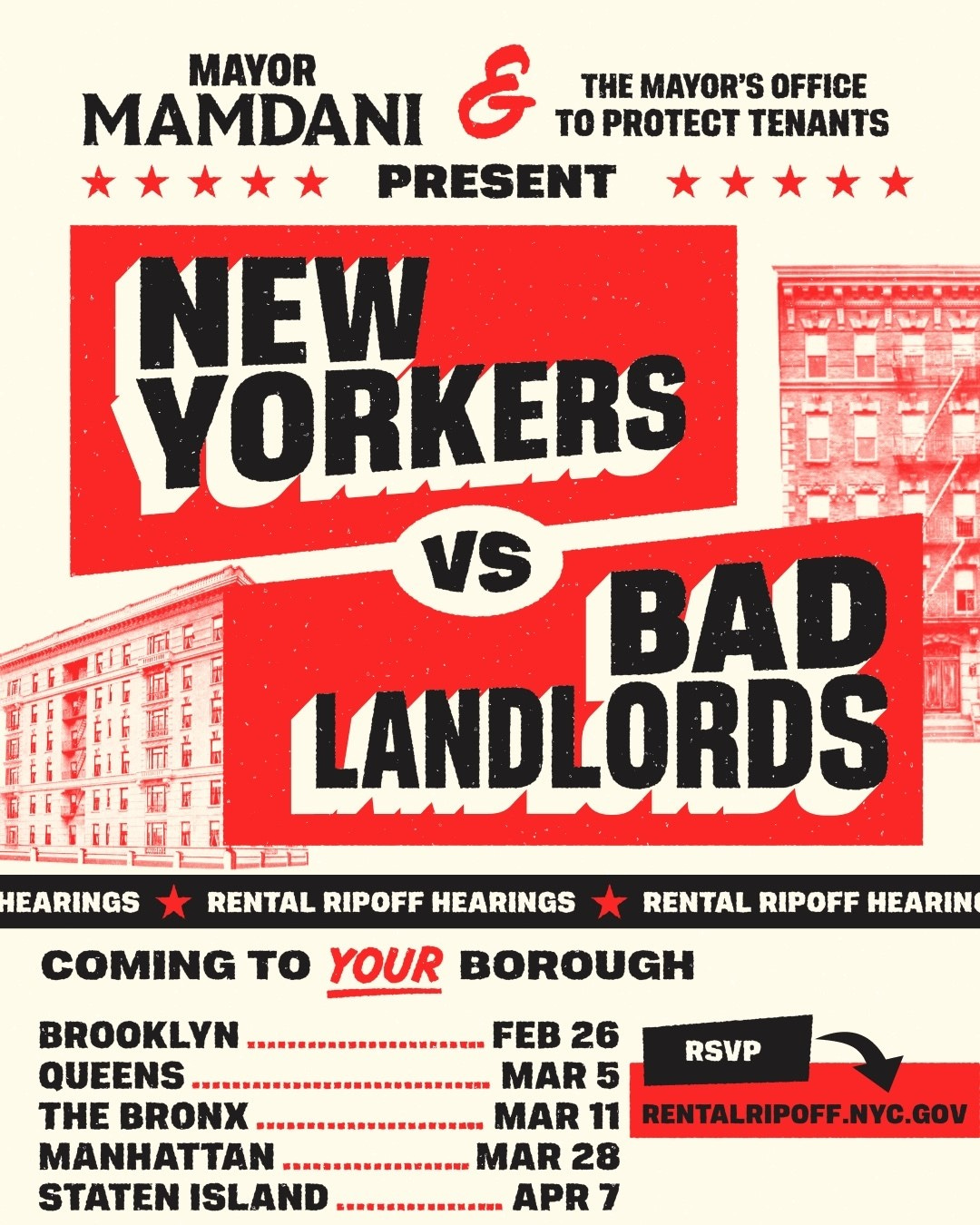
9. The Mamdani Method: Mamdani’s campaign design language has carried into governance — and it’s exceptional. Not just aesthetics but narrative: community, togetherness, participation, New York identity. Events, branding, and visual system all reinforce a single coherent story. Comparable to the Obama “Hope” system — design in service of a fiction that, believed widely enough, becomes real. Generational-level political branding.
10. The Washington Post's Doom Loop: Media is a just a product someone has to buy for a reason — it needs a transformational promise that makes you better, richer, happier, more competent, etc. No promise, no product-market fit. Losing $100M/year isn't a money problem, it's a product problem.
The Post has no answer to the only question that matters: who is it essential to? Will Lewis is out, the CRO is gone, 300+ cut — over 40% of the newsroom — and the layoffs were executed with either incompetence or indifference. Politico, Axios, and Punchbowl stole the Washington beat. The NYT locked in as lifestyle brand for upper-crust progressives. The Atlantic became talent-first DTC journalism for intellectual elites. The Post is stuck in the middle. The survival checklist for any media company now: POV, convening power, differentiated reporting, brand extensibility, licensing, and datasets that LLMs can't easily replicate.
Meanwhile People Inc, Bloomberg, NYT, Dow Jones, Reuters all showed that media businesses cam find a profitable lane.
11. Scan Club 2026: The Analog Antidote Arcade Studios’ trend report identifies five cultural currents for 2026: Improvisation (serendipity over optimization), Analog Everything (vinyl, journaling, crafts as rebellion against digital ubiquity), Romance of the Mundane (elevating simple acts), Camp (maximalism, cringe reclaimed as cool), and Lore (narrator-driven storytelling with audience participation). As AI content becomes cheap and ubiquitous, the human and the handmade become the luxury. Play with the Figma board.

"Once one firm uses AI to deliver faster and cheaper, competitors face a stark choice: adopt or explain why they’re still charging a premium for human hours." --Software will always be less expensive than humans. If software is more expensive there is no need to use it. Unless the work can not be done by humans... OMG.
High level info, this. 🙏