



POD 168: Monitoring the Situation
This week, like old Italian men with their hands clasped behind their backs at construction sites, we are monitoring various situations: Snowmageddon 2026, OpenAI’s inevitable embrace of advertising, Claude Code’s escape from the nerdery, why publishers are embracing prediction markets, the Davos divide between the Mark Carney and Donald Trump styles of communication, and the latest reminder that nothing ever really dies in media, it just mutates.
Out FRIDAY AM Apple | Spotify | Substack
Troy: Brian, thank you for introducing me to the term “umarell” today.
Good word. For the uninitiated, umarell is a modern Italian neologism, a word that has become a cultural archetype for the elderly man who spends his time monitoring construction sites with his hands clasped behind his back while offering unsolicited advice to the workers. Makes me think of my Dad (RIP) with his own Saskatchewan variation, standing in our suburban garage, smoking a Craven “A”, taking in a prairie thunderstorm. I’ve got my own annoying version, hovering behind agitated designers (sorry Alex).

I am feeling a more melancholy umarell this week, watching Trump and his reality roadshow hit Davos. Marco Rubio, Howard Lutnick, Scott Bessent, and Susie Wiles sat in their unrepentant umarell state — MAGA’s murderers row — as the boss rambled and insulted European leaders. Wiles, in particular, is the ultimate observer, the “Ice Maiden” whose disciplined, behind-the-scenes management has brought some stability to the administration’s chaotic rhythm.
Gavin Newsom tried desperately to shake a Davos umarell condition and transform it into main-character energy, imploring Europeans to “shed the kneepads,” showing just how much Trump has infected the rhetorical style of desperate politicians. Bessent, too, has caught the Trump bug, deriding Gov Newsom as “Patrick Bateman meets Sparkle Beach Ken,” adding that he “may be the only Californian who knows less about economics than Kamala Harris.” Davos has never been so lively.
Canada’s Mark Carney emerged from the once comfortable position of Chief Canadian umarell to show some “Middle Kingdom” swagger. Oh, how we’ve missed the articulations of thoughtful statesmen. Meanwhile, American business and tech moguls like Ken Griffin and Larry Fink found forums in Davos to mostly defend Trump or sidestep the insanity completely, hands behind their backs, carefully assessing growth opportunities in the “largest infrastructure buildout in human history”—the intersection of AI and tokenized finance.
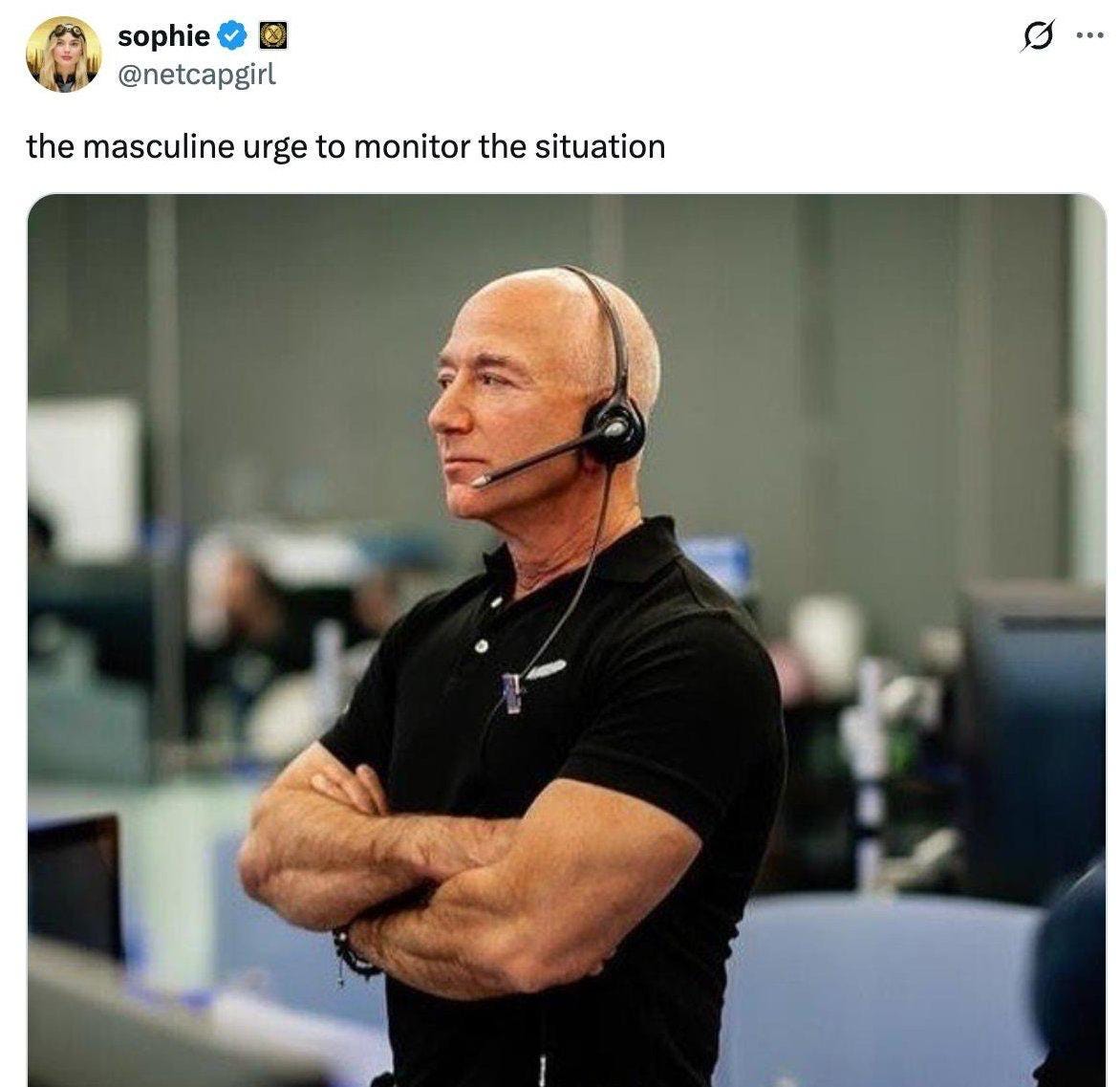
In other news this week, OpenAI has finally emerged from its cynical Silicon Valley state of advertising umarell-ism and embrace its inevitable financial seduction. I am of the camp that believes it is too little, too late. Google and Anthropic are about to eat their lunch and make the company AI’s Netscape footnote.
Apple, ever the patient AI umarell, has agreed to let Google do the heavy lifting on foundational models. This may go down in history as one of the great business moves of all time. By staying on the sidelines of expensive model wars, Apple remains focused on their enviable formula of consumer hardware/software poetry for which there is no rival. That’s plenty of protection from the AI monsters, especially when their powerful chips run commodity models locally. Oh, the cash and embarrassment this has saved.
Finally, in a contest to bring some new blood and thoughtfulness back to the platform, X is running a long-form content contest with a $1 million prize. The leading contender is Dan Koe’s How to fix your entire life in 1 day. It resonated with my kids, who are deep into the modern fight for agency.
Koe’s thesis strikes at the very heart of why we get stuck in the umarell position. He argues that we often pursue “unconscious goals” — like the goal of safety or the protection of a familiar identity — which keep us watching the construction rather than building our own. Koe’s “Anatomy of Identity” explains that we double down on the spectator role because we are terrified of the stress that comes with a threatened identity.
I will leave you with this decidedly un-umarell bit from the piece, a concept Koe calls Cybernetics — the art of steering — which strikes me as vital for these times:
“The only real test of intelligence is if you get what you want out of life... High intelligence is the ability to iterate, persist, and understand the big picture. The mark of low intelligence is the inability to learn from your mistakes.”
To move from the sidewalk to the site, we have to stop “monitoring” our lives and start steering them. We have to realize that if we want a specific outcome, we must adopt the lifestyle of that outcome long before we reach the finish line. Maybe it’s time to take out from behind our backs.
Ok. I will stop with the word of the week. What are your thoughts, Brian?
Brian: Is there room for umarell in this world?
This isn’t a time of umarell. Coe’s piece did so well because X is ideal for life hacks that flatter the Man in the Arena stereotype. We’ve spoken plenty about high agency. It’s the most critical trait going forward. Forget resilience or grit. Enduring won’t cut it anymore, sadly. I’ve always found something romantic and lonely about endurance.
The umari are a fitting symbol of what not to be. A very generous reading of Trump’s critique of Europe is that they’ve played the umari for too long. Zelensky said as much. Crises are always opportunities.
This is a bad time to be a middle power. It’s better to be very small or very large. If you’re small, you can specialize and mostly fly under the radar. If you’re big, you can boss people around and, as Carney astutely noted, exempt yourself from the rules. The middle, as always, gets compressed.
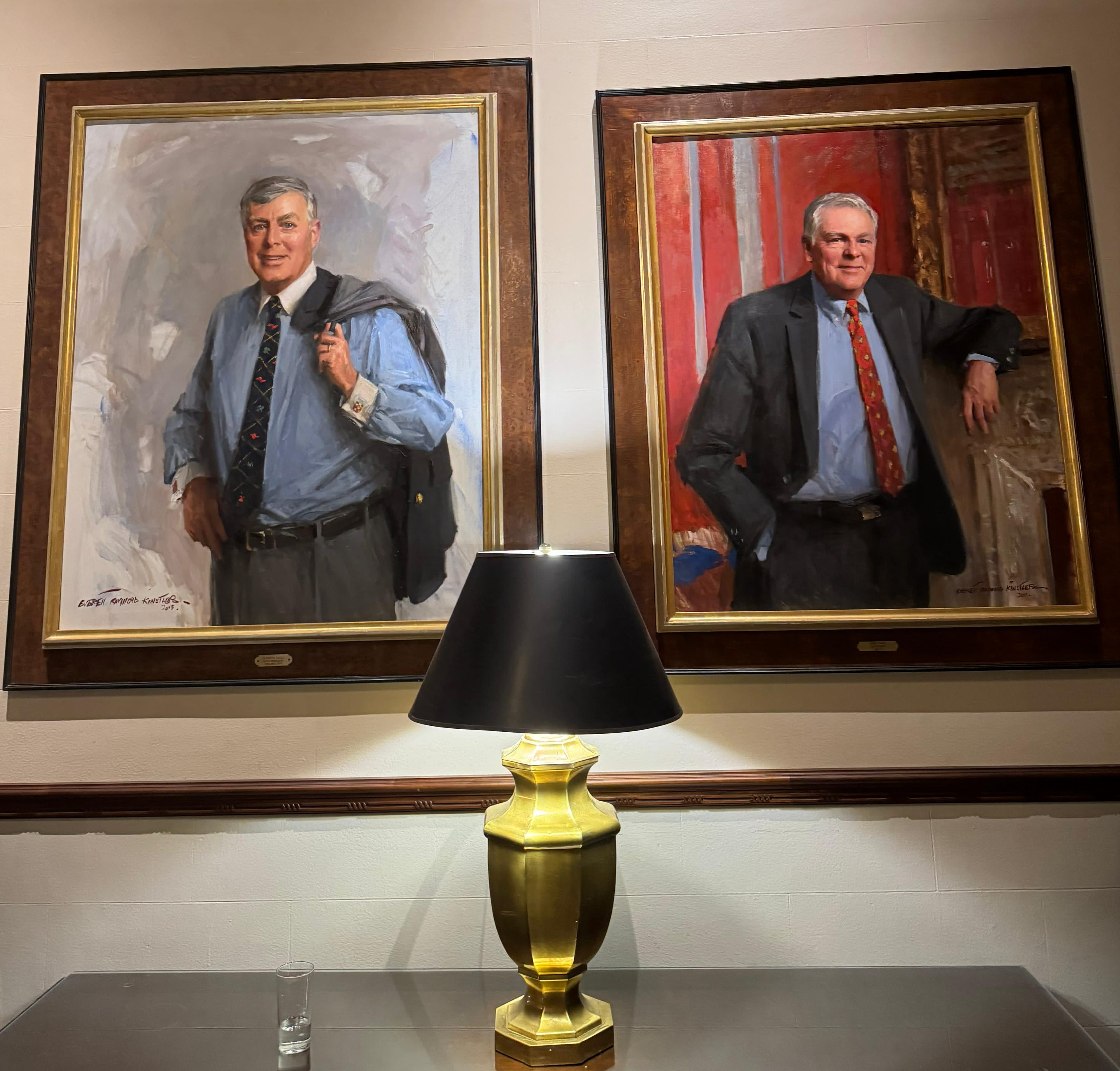
After our podcast, I went up to Midtown — I never go to Midtown anymore — to The New York Athletic Club for a fundraiser for the TD Foundation. It’s such a throwback place. I especially appreciate the oil paintings of grandees. Nobody does that anymore.
One conversation revolved around how too many publishers acted like umari in their businesses. I understand what the incentives were, but the pageview arb model is over. There are a lot of middle-power publishers that will need to compress. This is messy work, but it’s necessary. It’s also an opportunity to take a cue from Coe’s essay and stop pining for safety that isn’t coming.
Alex: we’re all umarells
It’s fun watching stuff get built. Some of it is for the sheer pleasure of the drama, and nobody makes drama like OpenAI who finally announced they’ll be testing out display (!!!) advertising in the coming weeks.
Sam Altman’s early dismissal of advertising wasn’t strategy; it was pride. OpenAI positioned itself as too visionary for something as pedestrian as ads. Maybe a classic middle-power mistake. They’re too consumer-focused to stay safely B2B like Anthropic, but too late to compete with Google’s cash printing infrastructure and its new alliance with Apple. I was watching from the sidelines rooting for them. I, like most consumers, don’t like ads but reality strikes again.
Google has unsurprisingly announced “no plan for ads in Gemini”, claiming that they were surprised OpenAI was putting them in so early. This was handed to them on a platter by OpenAI.
Meanwhile, Anthropic’s Claude Code is quickly becoming the de facto standard for everyone from weekend coders to enterprise. SaaS companies selling features that can now be replaced by a custom script in 20 minutes should be nervous and there are tons of those.
Most people on the planet don’t benefit from software as much as they could because off-the-shelf solutions never cover every use case and custom development is expensive. This is likely to change fast. I bet the majority of people reading this wishes there was an app that did this one thing.
I once said delivering utility could help media companies. Maybe now’s the time to stop watching and start building. The tools are here.
The 'umarell' observation is truely astute, a great peice of cultural analysis. What are the core models influencing publishers' pivot to prediction markets?