


Good morning…
There’s this idea that you should measure the AI usage of the people in your organization to create an enforcement structure and while this may seem a little fascist, anti-human, blunt-force — pick your objection — there may be something to it if you are gonna survive this wave. I say this because this week I decided to go deep into AI augmentation myself. I’ve obviously used the tools a ton but this week I went full vibe code mode, ClaudeCodeMaxxing, ripping apps, stumbling through Byzantine hosting configurators, API-ing… all the things. We will get to show and tell in a sec.
I’m on this journey with my kids because I’ve determined it is my job to turn them into little AI centaur monsters to help them survive. I splurged and sent them Mac Minis under the proviso that they would immediately become modern ham radio operators — deploying their own OpenClaw environments and building stuff. We’ve been sharing our new creations all week.
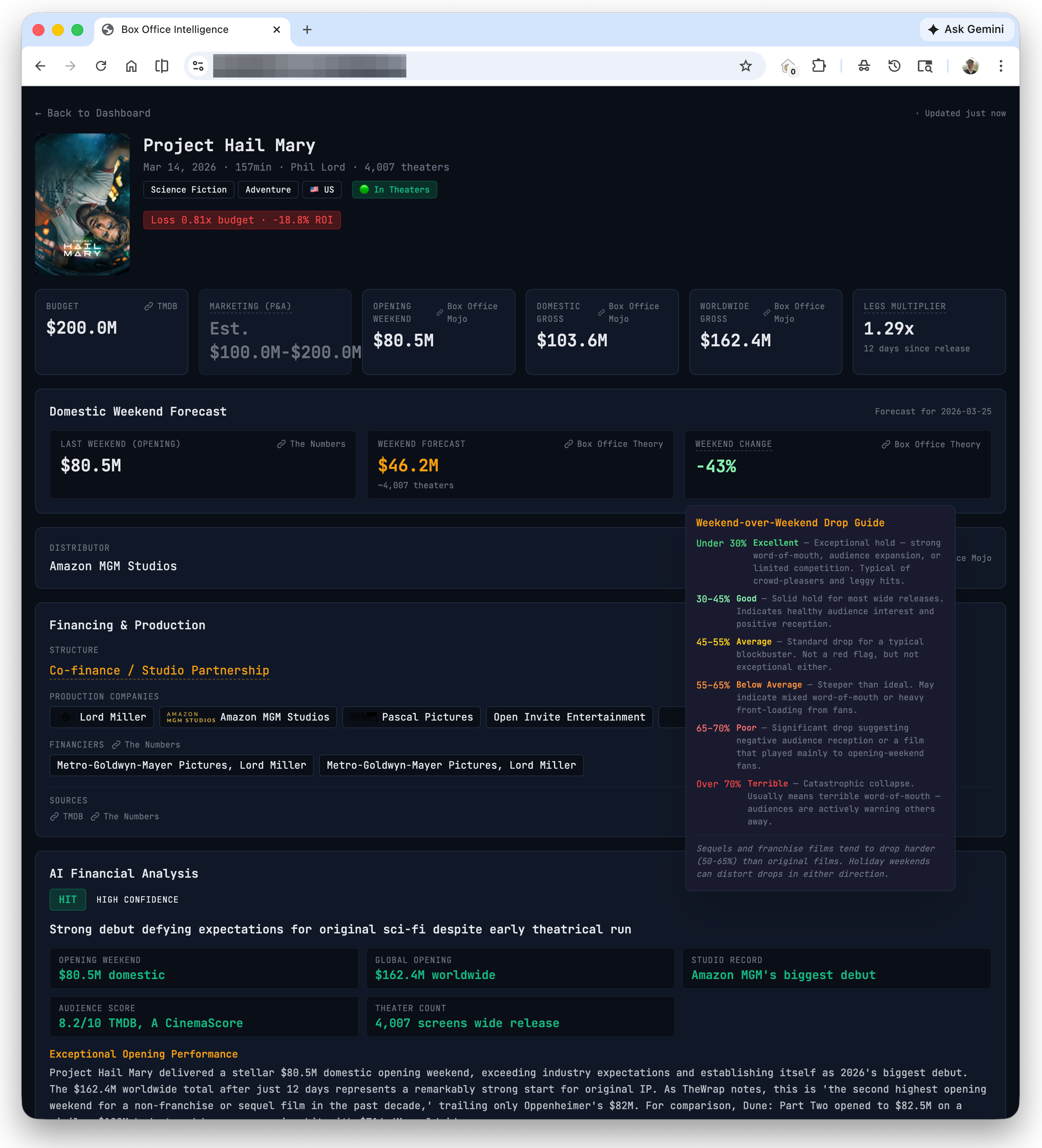
My daughter is a banker and film buff. She created her “FilmBrain,” a service that ingests your LetterBoxd profile and a couple of other data sources and spits out nightly movie recommendations based on a mood prompt. Neato. Yesterday she added “Box Office Intelligence” a Bloomberg level, real-time box office financial tracking and analysis app. Both of these are professional grade with genuine utility and sophisticated interfaces. In before times they would have taken months and lots of people. Crazy.
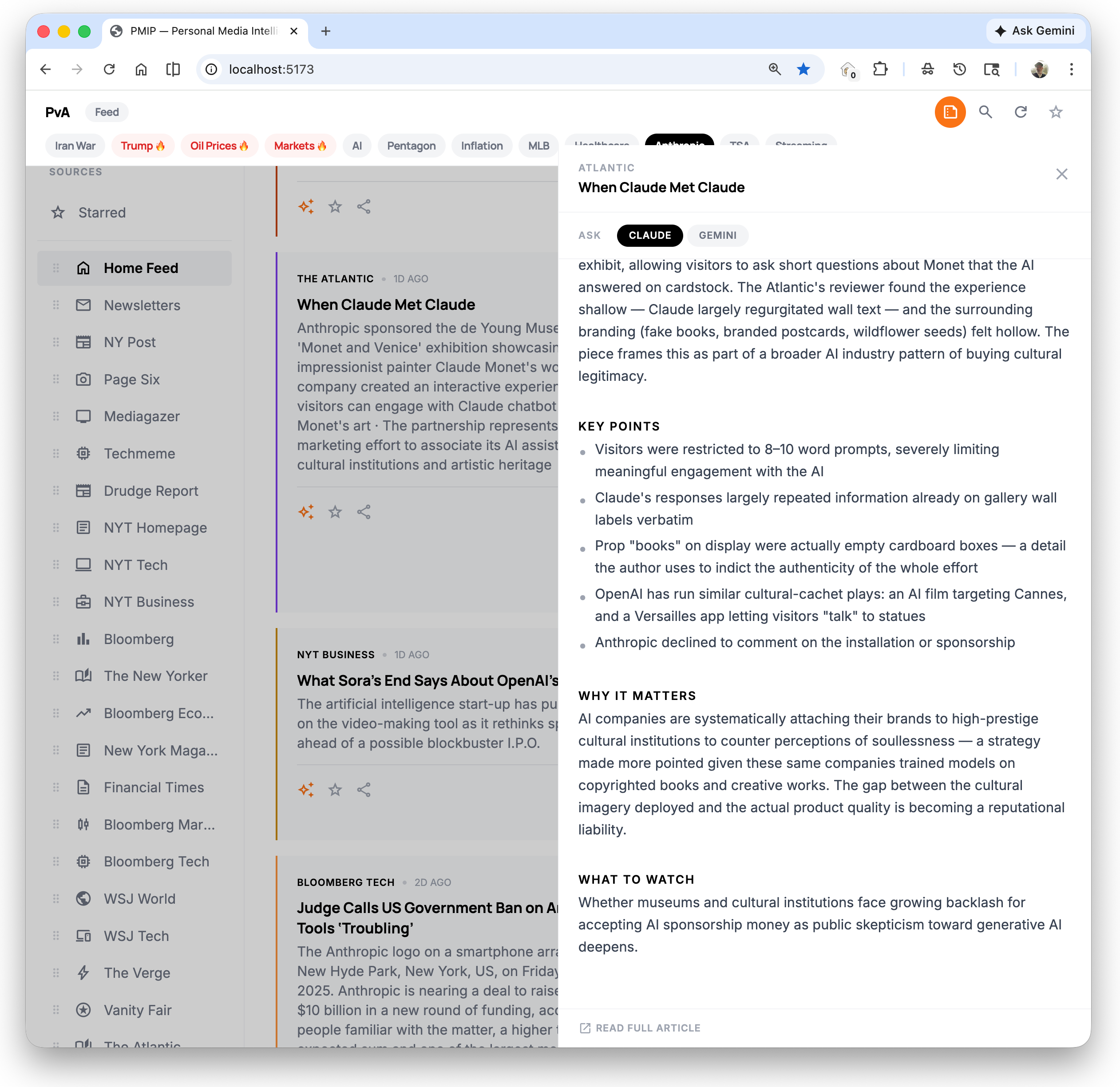
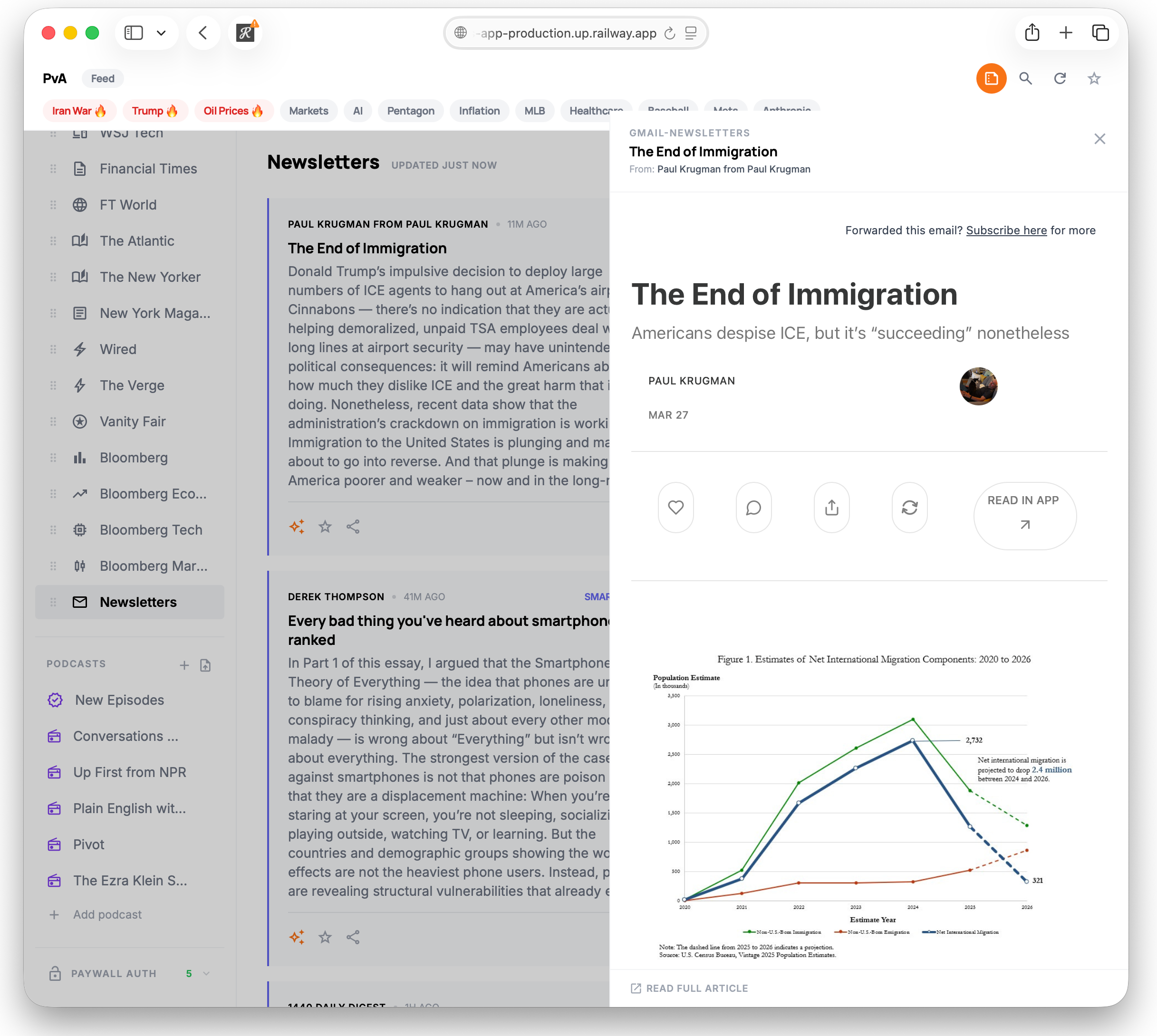
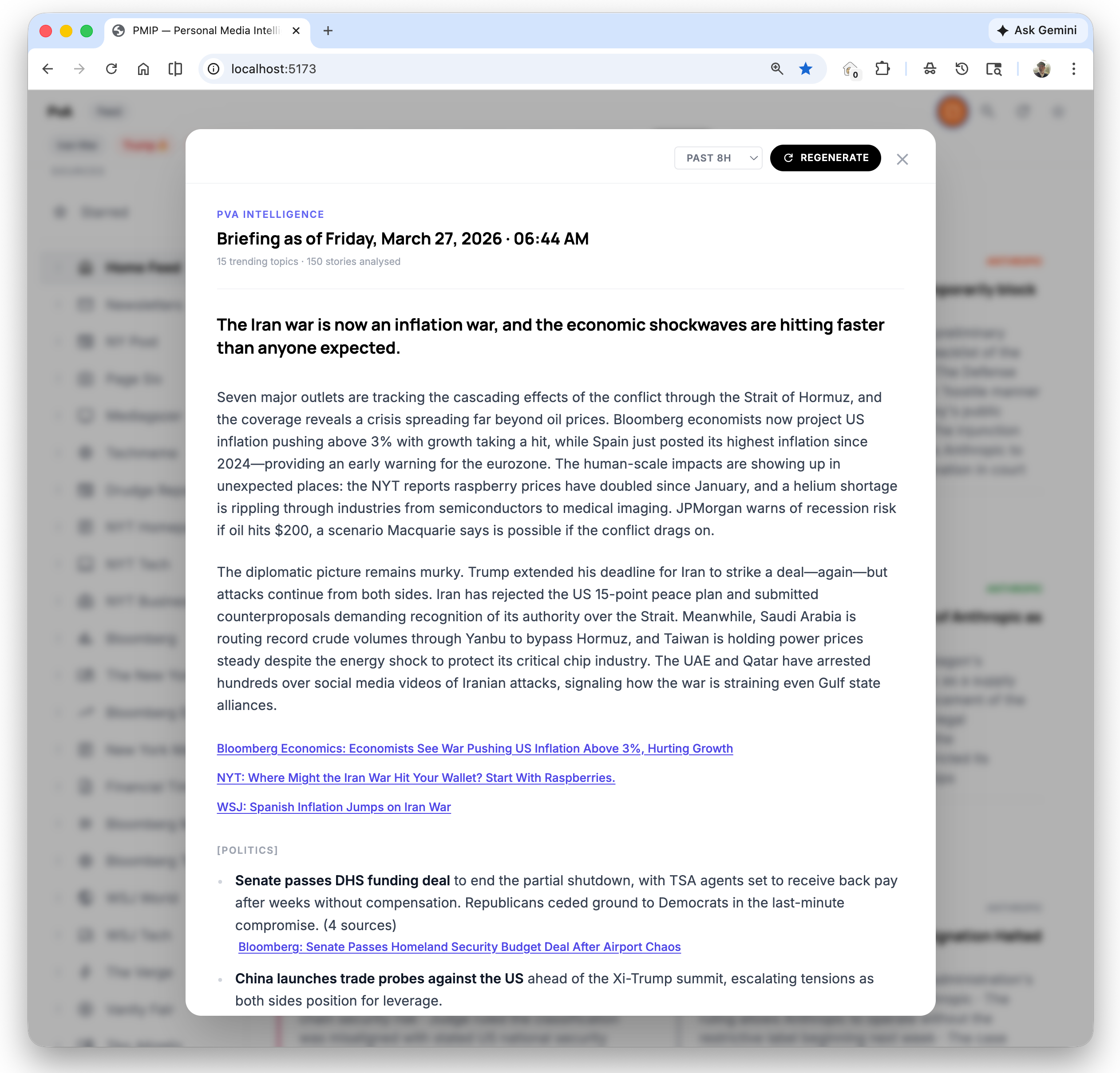
I decided to build my own personal media interface — something that could pull in my favorite sources (including all my newsletters) and create dynamic topical groupings and tight summaries based on authenticated full-text analysis. I wanted to summarize the entire corpus of news every four hours and email it to me. I added prediction market contract references where I could find them, as well as the ability to save stories and share them to WhatsApp. After a few hours of tinkering and another few hours of refinement, this is what came out:
The main feed gathers all my news sources by recency.
Dynamic topic clusters are created by identifying patterns across all sources.
Summaries are generated from authenticated full-story text for my subscriptions.
A dedicated service fetches all my email newsletters and presents the intact HTML in a right-hand window.
We search the Kashi API for each story, cross-referencing prediction contracts where appropriate.
A meta-summary analyzes all sources to produce a macro update, which is then sent to me.


None of this is ground breaking stuff. Tons of aggregators have been built. Remember Summly, the aggregation app that British 17 year old Nick D’Aloiso sold to Yahoo for $30M in 2013? Or last year’s Artifact news app that Instagram creators Kevin Systrom and Mike Krieger failed to get going and handed to Yahoo as an acqui-hire?
But this is designed for me. I built it and will improve it over time. This stuff used to take teams of people months. I did it in hours.
My takeaway is this: the new AI landscape for professionals is a game of maximizing personal leverage. The most effective creators will be those who marshal a fleet of robots to multiply their instincts, taste, and judgment. In this world, “productive token usage” is a legitimate KPI — it measures how many virtual agents you have extending your human impact. Aside from that, a few practical lessons:
Move fearlessly. Whether you use Claude or another LLM, the tool will course-correct when you stumble. Don’t let the technical overhead — especially the labyrinth of cloud interfaces — intimidate you. Your AI is there to help you navigate the complexity.
The recursive nature of these coding agents is staggering. They iterate, fix, and refine autonomously. Once you learn how to summon and direct them, it’s incredibly empowering. The tight feedback loop between you (acting as Product Lead and Designer) and the machine (Claude) is the real magic. AI doesn’t just speed up development; it collapses the entire product cycle.
It’s still difficult to build things that are useful, beautiful and simple; the temptation is always to “over-feature” simply because the AI makes it so easy. Furthermore, sourcing high-signal data remains a hurdle. For my media engine, I’m constantly hunting for what’s truly novel. While the major platforms (X, Insta, TikTok, etc.) have perfected “The Algo,” extracting that data to power a bespoke personal feed is the promised land.
Related… this guy is the alpha AI news creator at Fortune. Months ago he would have been cancelled for perpetuating media AI hate crimes. While, you don’t want your entire newsroom doing it, it’s definitely coming to every media org. WSJ: An AI Upheaval Is Coming for Media. This Journalist Is Already All In.

Pod 177: The War on Slop
Out FRIDAY 6 AM EST Apple | Spotify | Substack
AI’s not very popular. OpenAI is pivoting to the enterprise, Kentucky farmers are modern folk heroes by not selling their land for a datacenter, and Meta and YouTube get the Big Tobacco treatment. Plus: Troy gives a progress report on his vibe coded Personal Intelligence Media Platform, AB’s take on Vox Media’s podcast business and MarketBeat’s profitable fin-pub hustle, and Wired’s reinvention as a Big Tech critic.
Fruit Love Island meets the Whitehouse cause this is where we are now.
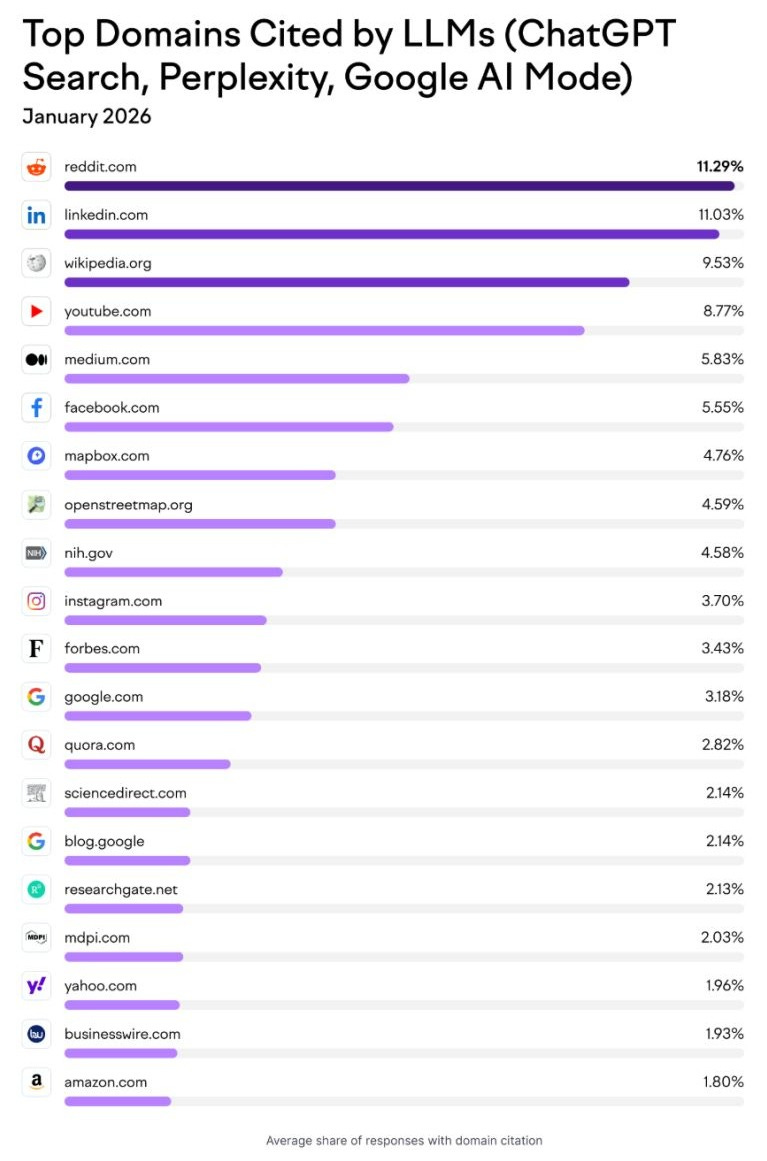
Chart of the day: Do the LLMs need professional media?
Sora… more like Snora. In a move that feels like Lucy pulling the football away from Charlie Brown, OpenAI is reportedly shuttering Sora just months after its viral launch. The $1 billion Disney deal is dead, and the pivot to “Enterprise” is on. It turns out “Fat Troy” and AI-generated fruit people are mildly entertaining but lack the human “stickiness” required for a real business. As platforms begin to filter for generative “slop,” the only remaining moat is unpolished, messy human connection.
Defective by Design. A landmark jury verdict found Meta and YouTube liable for “addictive design features,” a massive strategic shift in tech litigation. By framing infinite scroll and push notifications as defective product design rather than protected content, the plaintiffs sidestepped Section 230’s liability shields. Meta was held 70% liable for the mental health decline of a minor; expect this to become the “Big Tobacco” framework for thousands of pending cases nationwide.
The Miami Reordering. Everything in Florida is an invasive species, from the iguanas to the economy currently reshaping the city. Ground zero for a specific kind of physical-world reorganization, Miami is a place where the hotel minibar is officially dead, killed by a more fragmented, local “experience” economy. Whether it’s an iguana disrupting a Pura Vida açaí line or the shift toward gated, luxury lifestyle clusters, Miami is where the “abundance agenda” meets the reality of a world that has stopped pretending to be one size fits all.

Wired’s Critical Lane. The “Gee whiz, tech is awesome” era of media is officially commoditized. Katie Drummond has successfully remade Wired into a vital, critical check on tech power—a move that makes it subscription viable. The Verge, who has suffered through a massive decline in traffic, would kill for the same cred.
The $50M Sioux Falls Arbitrage. While Vox Media reportedly struggles to a path to liquidity, a little-known company called MarketBeat is quietly clearing $25M in profit with just 20 employees. It’s a pure leverage play: buy leads, sell premium stock-picking research, and keep the team lean. It’s “icky” to institutional players like the Wall Street Journal, which is exactly why it’s a protected, highly profitable niche that legacy media can’t touch.
The Atlantic Sets Sail. The “pivot to events” has finally gone to sea. The Atlantic has partnered with Seabourn Cruise Line to program 12-day intellectual cruises from Montreal to Boston. It’s a creative way to bypass the logistical nightmare of traditional conferences while leaning into the luxury “experience economy”. If you have a powerful brand that acts as a congregation point for a specific community, putting them on a boat is the ultimate high-margin strategy.
The Bari Weiss Ratings Wipeout. Six months into the overhaul of CBS News, the results are grim: ratings are collapsing to historic lows, and the evening news has dropped below 4M viewers. Over at CNN, you can’t just put Jake Tapper in an office with a giant podcast microphone and call it a pivot. Legacy media is trying to “fake the insurrectionary energy” of the podcast world, while missing the fact that the audience can smell the artifice from a mile away.
GOOD PRODUCT

Eating at the bar is always the way. The layout allows you to toggle between a friendly bartender, your guest and the stranger to your left. It remains a perfect way to dine. This week we hit Minetta Tavern for a cold martini, grilled oysters, bone marrow and their juicy aged burger. Reservations are for organized people. Just get there early for a shot at a coveted bar spot.
Like the links? Think we could do better? Let us know!
Thanks David. So crazy to be able to do this. Everything is lego. Appreciate comment
@Troy "WANT" -> TroyBrief.
And a big congrats to your daughter on FilmBrain. Box Office Mojo and The Numbers, watch out!