


Good morning…
Was nice to attend Brian Morrissey’s over-capacity Rebooting mixer last night in Manhattan. Even an insider found himself in line for 15 minutes. Great crowd including the always feral, the wonderfully shameless and endlessly authentic Lachlan Cartwright who I’ve developed great affection for. Much better interacting socially than landing in the Breakers crosshairs. Always nice to see the media podcast GOAT Peter Kafka, fresh off an interview with People, Inc’s machine gun Neil Vogel. Man, that Neil can talk up his company. Seems like stuff is working… the results are impressive. Also, a shoutout to the new friend I made at the bar. She asked what pod hosts I like. After naming a couple I did say I find myself hate listening to Pivot’s Scott and Kara, whom she confessed she worked with. Oh well.
Quickly on tech bro language, self mythologizing and the hegemonic age of American tech. The tech guys love to use the term First Principles Thinking (FPT). The All In guys throw it around a lot. Something about FPT irks me.
FPT is the Descartes-inspired method of breaking a problem down to its fundamental, irreducible truths — the “physics” of the situation — and building back up from there. Elon uses it to justify reusable rockets; Travis Kalanick uses it to justify the “Atoms” of infrastructure. In practice, reckless usage is often just a linguistic bitch move, an arrogant way for the technical elite to suggest you have not brought their native system thinking to a problem, that if you aren’t stripping away 100 years of human convention, you’re just “thinking by analogy” and, therefore, part of the problem. It assumes the world is a frictionless vacuum where systems can be re-engineered without the messy “plumbing” of human reality getting in the way. It’s a philosophy that treats society as a math problem to be solved rather than a community to be navigated. Let’s just put it in the category of “let’s double click on that” and move on.
In other language offenses this week, Travis Kalanick’s manifesto for his new company, Atoms, struck me as a high order new case study in Tech Bro Self Mythologizing (TBSM). This line is special… “I bled, but I did not perish. I got back up and fought my way back into the arena, back to my calling. Back to building.”
Time to make this email more conversational. The inbox is overflowing and, as we are beginning to appreciate, outside of the real auteurs like Tina Brown and her Fresh Hell, AI is making text too abundant to navigate.

Pod 176: First Principles Meet the Real World
Out FRIDAY 6 AM EST Apple | Spotify | Substack
Silicon Valley’s “First Principles Thinkers” claim AI will push the cost of intelligence to zero and cook the entire laptop class. But physiotherapists still use accountants, dentists are in great shape and our own vibe coding experiments run into snags. Plus: The return of Travis Kalanick and the Mount Rushmore of tech titans, Google Stitch, who lost BuzzFeed, The Trade Desk’s woes, the Oscars as reflective of the end of the old Hollywood model, why The Economist is catnip for billionaires, and why mass layoffs and rapid rehiring are the new corporate norm
Miami real estate has eccentric aesthetics you don’t find in many corporate fields.

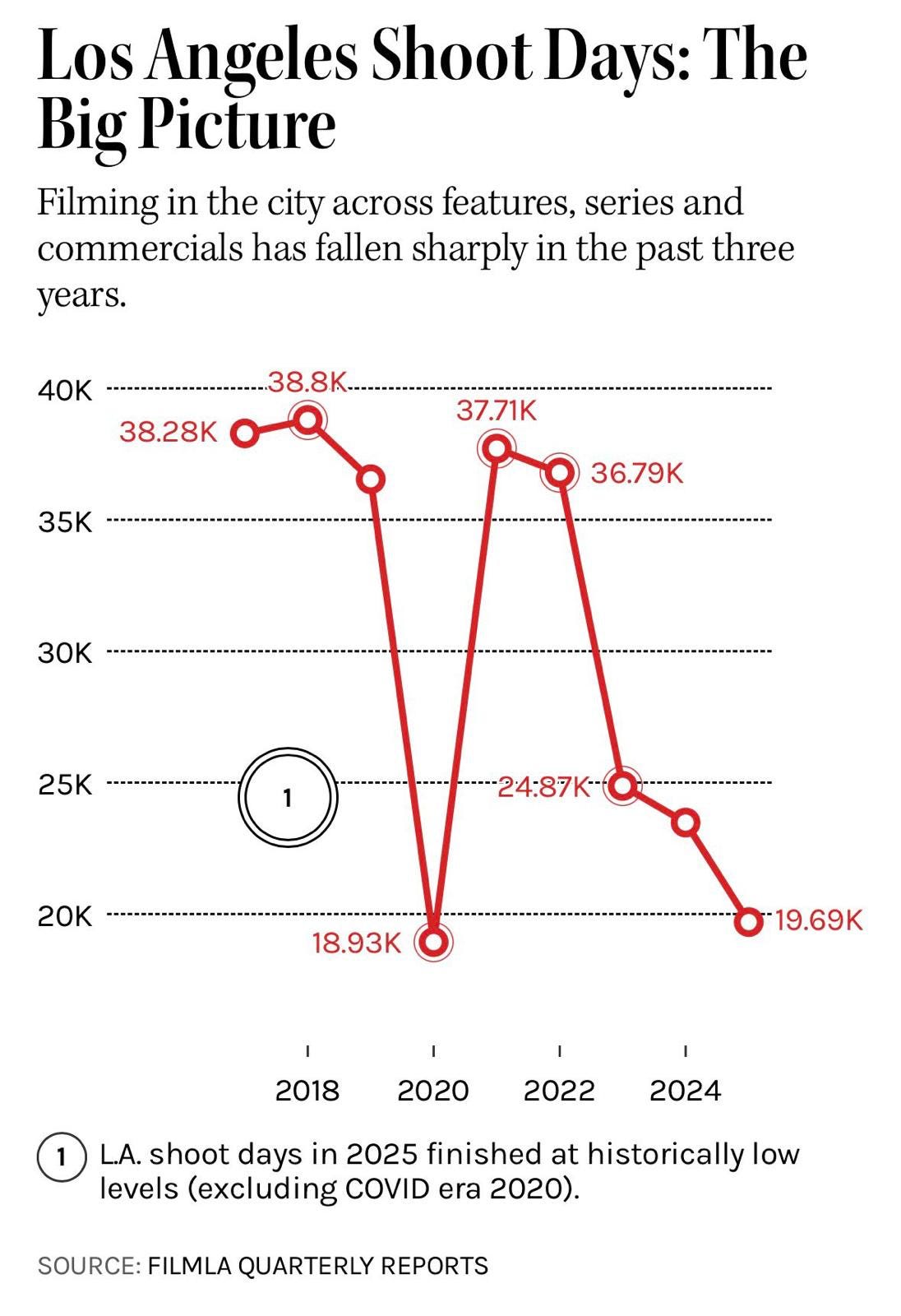
LA is new Detroit in two charts
LA shoot days fell 49% in 2025, hitting COVID-era lows. The “Hollywood model” is struggling as production flees the city’s high costs. Meanwhile, Timothée Chalamet got piled on for saying he doesn’t want film to become like “ballet or opera”—a niche art for a shrinking elite. The defensiveness of the reaction was the tell: Hollywood is terrified that cinema is losing its place as the “greatest common denominator” of culture. 🔗 Hollywood’s economic strain and the historic low in shoot days
Introspection is not a first principle.

A clip of Marc Andreessen arguing that introspection is a “modern invention” (and possibly European) made the rounds this week. He argues for eliminating internal reflection in favor of a “bias to action.” It’s First Principles Thinking applied to the soul — treating the human mind like a bottleneck in a production process. If introspection is friction, Marc is essentially arguing for a world of pure, unreflective execution. 🔗 Andreessen’s argument against the “friction” of introspection
Syntax to Synthesis
On the podcast this week, we went into the “engine room” to vibe-code our very own personal news engine. The exercise revealed the massive gap between Consumer AI (chatting) and Developer AI (building). The definition of a “developer” is shifting from someone who writes code to someone who understands the workflow. In this new era, curiosity + clarity is more valuable than a CS degree — if you can describe a problem perfectly, you are the architect. However, the “last-mile” remains a struggle with the “plumbing”: the Byzantine security hurdles and Google Cloud Consoles that still feel built for 20th-century systems engineers.

Google’s “Agentic Pipeline”
While the industry is distracted by infinite canvases, the real news is DESIGN.md. Google just shipped a portable, agent-readable design system file that bridges the gap between the PM’s brain and the machine’s output. By connecting Stitch directly to Claude Code and Gemini, the coding agent can now “read” the design system as it builds. The old loop of PRD → Design → Code used to require three teams and endless handoffs; now, it’s one tight context file. No Figma export, no “the developer interpreted the design wrong.” Just direct synthesis. Figma’s stock is down over 10% in last two days. 🔗 Google’s Stitch and the agent-readable design system
Meta’s 16,000-Person Pivot
Meta is reportedly preparing its largest layoff since the “Year of Efficiency,” cutting 20% of its workforce while committing a staggering $115–135B to AI capex this year. In Menlo Park, layoffs are no longer a sign of failure but a financing mechanism for a $600 billion data center roadmap. Zuckerberg is leaning into a new operational thesis: that AI allows a few talented people to do what previously required massive teams. The “loyalty” model is dead; in its place is a nimble, free-agent system that prioritizes compute over headcount. 🔗 Meta weighs job cuts to fuel AI ambitions
“I Bled, But I Did Not Perish”
Travis Kalanick is back in the arena with Atoms, a venture pitching itself as the infrastructure layer for the physical world—robotics, manufacturing, and transport. His 1,700-word manifesto is an award-winning act of self-mythologizing, framing his return as a “Software to Atoms” crusade. He sounds like a dude trying to pick up women at an MIT theoretical physics mixer. Kalanick is determined to be part of the pantheon of “hardcore” legends. 🔗 Kalanick’s “Atoms” and the infrastructure of the physical world
The 17x Scarcity Premium
Canadian mortgage billionaire Stephen Smith just acquired a 26.9% stake in The Economist Group for roughly $400M. At a 17x EBITDA multiple, Smith is buying into the ultimate gated community: a business with 1.25M subscribers and a 91% retention rate. Pairing this with his chairmanship at Glass Lewis (the proxy voting giant), Smith now sits at the center of the global governance loop: owning the brand that tells the elite how to think, and the firm that tells them how to vote. It’s not a takeover; it’s a seat at the world’s most influential table. 🔗 Stephen Smith’s billion-dollar bet on The Economist
The Trade Desk’s “Trumpian” Moment
The king of independent ad tech had a rough year, losing over 60% of its value despite Q4 revenue being up 14%. CEO Jeff Green responded by putting $150M of his own money into the stock and blaming trade publications like AdExchanger and AdWeek for the collapse. It’s a cautionary tale of the “Open Web’s” transparency crisis: when a CEO starts screaming at the press to justify his stock price, it’s a signal that the “neutral middleman” model is under siege by the Walled Gardens. Link: Jeff Green loads up on The Trade Desk’s beaten-down stock
The AI Productivity Trap
A new study reveals the “Jagged Frontier” of AI assistance: workers completed routine tasks 25% faster with AI, but on complex, “out-of-frontier” tasks, they were 19% less likely to get the right answer than those working without it. AI makes us better at the easy stuff and worse at the hard stuff. It turns knowledge workers into “System Managers” who may lose the very critical thinking skills required to audit the machine’s hallucinations. 🔗 AI-assisted workers and the “frontier” of complex tasks
The End of the Traffic Era
BuzzFeed has filed a going-concern warning, its market cap plummeting from $1.7B to just $28M. Early backer Ken Lerer went on record throwing Jonah Peretti under the bus, saying “they blew it.” The reality is more structural: BuzzFeed was built for a paradigm of social scale and woke SEO that has completely dissolved. It is now pivoting to an “app studio”—a final off-ramp for a brand that once defined the internet’s traffic-first era. 🔗 How BuzzFeed spiraled from media darling to bankruptcy brink
The Pope vs. The Wii Spoof
Pope Leo called on media to stop glorifying war and making it look like a video game. Meanwhile, the White House X account posted a bizarre Wii game spoof about Iran. It’s a surreal collision of narratives: the moral authority of the Church versus an internet-native administration that treats geopolitics with the vocabulary of a Nintendo trailer. 🔗 The Pope asks media to stop glorifying war propaganda
The Vanishing Entry-Level Job
Entry-level positions for New York graduates are down 37% since 2022. The “on-ramp” to the professional class is being dismantled as firms cut junior roles in favor of automation and mid-level “efficiency.” For the first time, unemployment among recent college grads is higher than the general workforce—a systemic crisis for the next generation of knowledge workers. 🔗 Why entry-level jobs are vanishing for New York graduates
GOOD PRODUCT
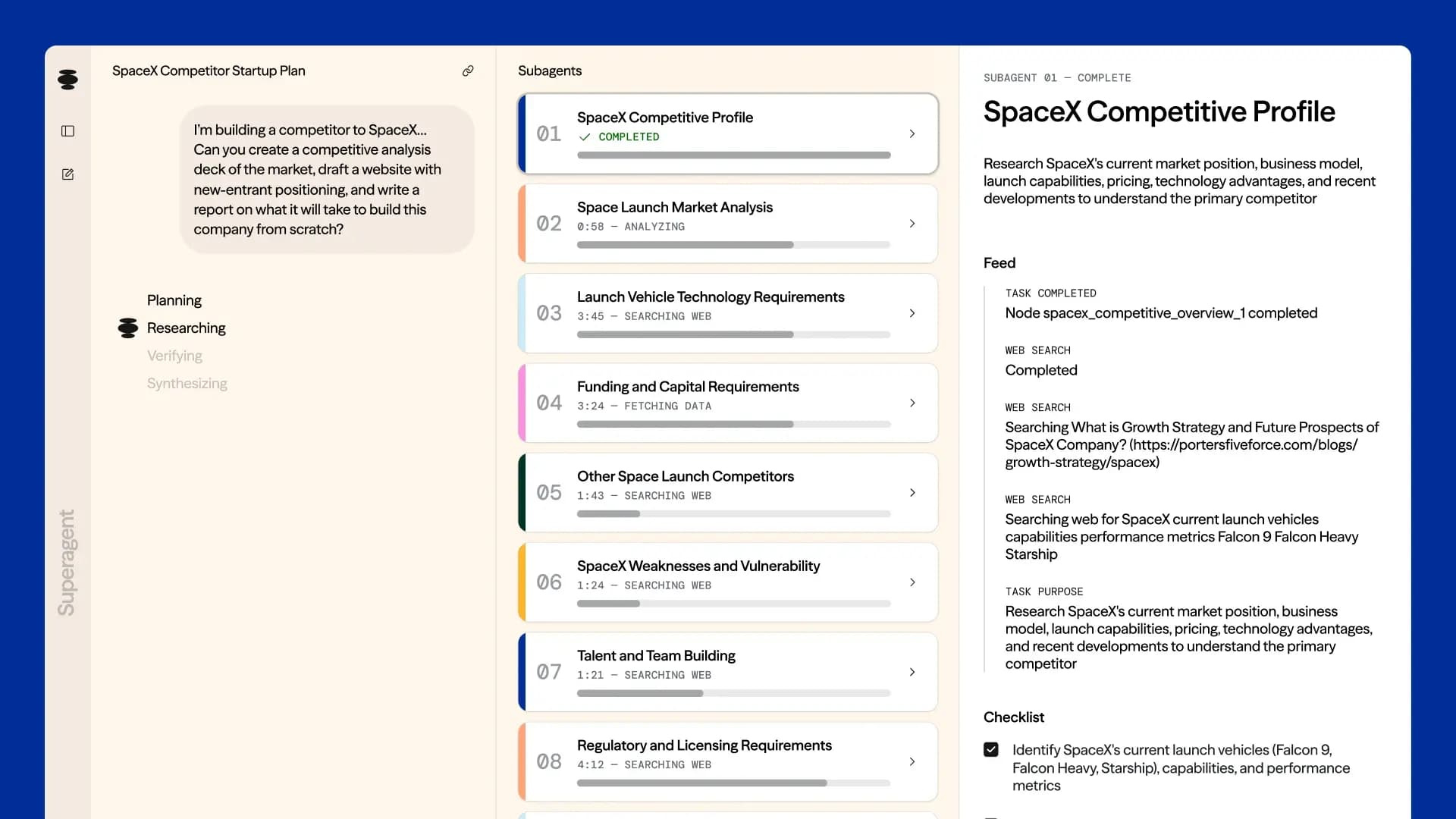
Airtable Super Agent
Airtable just launched a free beta of Super Agent, adding an AI layer on top of their core database. It’s a big company moving like a startup because it has to in the “SaaSpocalypse.” The CEO is personally emailing users for feedback—a sign that in the AI era, even established platforms have to scramble to prove their “agentic” value. 🔗 Airtable’s Super Agent and the future of databases
Good Product: YouTube TV Split Screen
YouTube TV’s four-way split-screen is the definitive way to watch news. Running Fox, MSNBC, CNN, and the BBC simultaneously on a 75-inch screen allows you to watch the narratives clash in real-time and shift your attention the moment the pharma ads hit. High-signal, low-friction. 🔗 How to multi-view
Like the links? Think we could do better? Let us know!
It doesn't look like BuzzFeed's app-studio debut at SXSW went well: https://techcrunch.com/2026/03/17/buzzfeed-ai-slop-apps-sxsw-bf-island-conjure/
Dude that take down of first principles thinking nailed it. Made my day.