


Good morning rebels.
Death Star seems like a fitting analogy for the big LLMs — both are gargantuan mega projects requiring sinister minds, imperial scale and galaxies of energy. Both capable of vaporizing planets with a blast of their mighty lasers. Fortunately, both have structural vulnerabilities. Like the Rebel Alliance, one needs to focus deeply here.
But before we start, let’s appreciate what is becoming obvious: most things are just code. AI does code good. Code is a complex set of rules — optimizable loops whose patterns can be mined and automated by the machines.
Anthropic wisely focused here when OpenAI was doing victory laps for becoming the Kleenex of consumer chat. The emerging insight... coding isn’t just for coders. Cameras used to be the province of experts too. What if you can turn everyone into their own little machine makers. This is happening and it is a staggering outcome.
Writing remains a more direct path to human hearts. Claude doesn’t have a heart. Writing still needs humans. Code doesn’t. It just needs to work. Machines making machines are far more disruptive than automating language.
This week Claude highlighted that many creative things are just code in a different form. Design is code. Images are code. Inspired new creative ideas may not be, but 95% of it is code by another name. Earlier in my career I worked with legions of people — information architects, strategists, project managers, UX designers, animators, creative directors, front-end coders —all creating digital design systems for deep-pocketed clients. This work is quaint now. Yesterday I uploaded a rough interface to the new Claude Design, gave the system some superficial direction and five minutes later had a fully coded design system that I could tweak and shove into my code base. Presto… an entire professional category needs to find value upstream.
Of course many knowledge work categories are just code by another name. Lawyers do code. Financial people do code. Doctors do code. But these are domains with more consequence than design so mistakes matter more and they will need people in the loop for longer. But code they remain.
So, naturally lots of people will make a lots of nifty new machines with these machine makers. Many people will want these machines to become businesses. This is good and necessary because we need to work. The question remains, how will these little machines sustain next to the Death Star? Where will the human makers find the Thermal Exhaust Ports of this new and mighty Galactic Empire. Some observations…
Many will confuse superficial prompt structures and workflows and interfaces on top of the Death Star as powerful new weapons in the race. They are not. They are toys in the eyes of the Death Star people who will destroy you with a push of the button on their Death Star consoles. The Empire has better consoles.
As I sit at my puny console, shelling out more and more cash to the Death Star token dealers, I am thinking about what leverage remains. These are my rules for Rebels looking for the vulnerabilities in the new galactic systems.
Get to the transaction. Text and interface and all that stuff are commodities and fungible inputs to the Death Star. It cannot take away a transaction. Transactions are formalized, quantifiable and optimizable exchanges between people, that noble, immortal act of someone selling something to someone. The SKU is undisputed. You own your transaction.
Learn to sell. Everybody will make new things and think these new things are businesses. They are not unless their products are sold. So, the advantage goes to people that know how to sell things. Selling takes narrative flair and the chops of a seasoned online arbitrager. You need both. Advantage goes to marketers that can sell shit.
Protect the data. If you have great data and you probably don’t but if you have differentiated, leveragable data, protect it with all of your Rebel energy. This is your Kyber crystal, so to speak. The Empire will want it. Don’t give it to them.
Human energy is king. Your energy comes from the power of human networks. If you can connect and activate networks of people, you assemble your own Rebel force to take on Death Star. Or they will just buy you, which is fine.
Think small. The Empire machines are just like shiny packaged goods. You are farm-to-table. You are vinyl. Whatever. The world is dividing between that which is human at that that is not. Both are valuable. Know where you stand, Jedi.
Habits and utility are always powerful so try to harness this force. If you can build a habit around your thing you have stolen galactic energy. Nice one. But you can’t put this in a business plan. Maybe you will get lucky.
Master the tools of the Empire as a force of cosmic good.
Be Beck. Like he says below. You just gotta make stuff. Zero regrets. Cost of failure is zilch. This is the Force.
“Make your own world. Ignore everything else. Just indulge yourself. Everything you love. Don’t ask for permission. Don’t wait for somebody to tell you what’s cool. Even if it’s just for five friends.”

Pod 181: Spooning the Gravy
Out FRIDAY 6 AM EST Apple | Spotify | Substack
Troy’s vibe coding project has moved into high gear, as institutional and personal memory becomes the point of leverage with media’s ultimate goal shifting to how to get the right people in the saloon. Claude Design and GPT-Image 2 reinforce the same message: You’re either high-end craftsman or you’re orchestrating AI systems, like it or not. Plus: Tim Cook hands over the CEO reigns after Apple’s boring decade, why media is about artists, suits and engineers, the dismal fate of much of Vox’s publishing assets, the emptiness of cloned media assets and why there’s leverage in coming out of the kitchen to spoon the gravy, no matter how much you’ve accomplished.
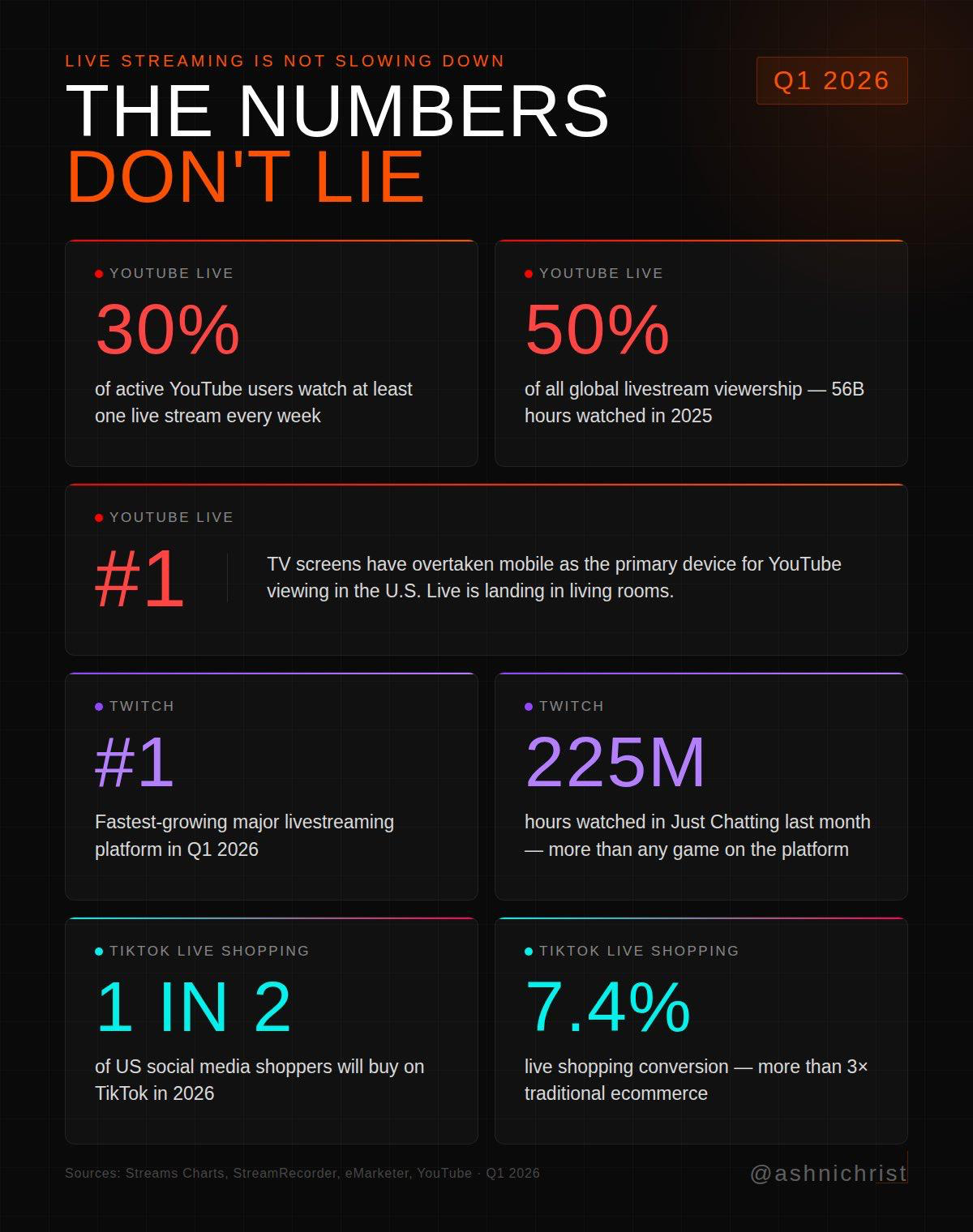
I’m not ready for another “streaming is going mainstream” cycle. I’ve been through many. But maybe this time, maybe.
Claude Design Moves Up the Stack
Anthropic is rolling out Claude Design, a research preview that turns text prompts into prototypes, decks, and one-pagers, powered by Opus 4.7 and available to Pro, Max, Team, and Enterprise. The hook isn’t the export menu (PDF, URL, PPTX, Canva)—it’s that Claude can read your codebase and design files and then apply your tokens and components. That’s the spec layer, where PMs lock scope and founders sell roadmaps. This isn’t a Canva play; it’s a Microsoft/Adobe preemption. If Anthropic owns the first draft of “what we’re building,” it owns the meeting. 🔗 Anthropic launches Claude Design, a new product for creating quick visuals | TechCrunch
GPT-Image-2-Thinking agent generates QR codes, diagrams
OpenAI’s GPT-Image-2-Thinking isn’t a model at all but an image agent that chains web search and Photoshop-like tools in a loop—taking “multiple tens of minutes” per output and still one-shotting QR codes, diagrams, logos, foods, and faces. The market for image generators is tiny today (~$0.43B) but the use case is enterprise—62% of marketers already use genAI for images, and they don’t care about vibes, they care about briefs. 🔗 Image-2-Thinking is a new Image AGENT that basically has search and photoshop as a tool to use in an agent loop
Katie Couric on Media “Capitulation”
Katie Couric says network news has “capitulated” to Trump—normalizing falsehoods with euphemisms, airing live propaganda without real-time checks, and chasing ratings over accountability. The trust data backs the rot: Gallup puts media trust at 28% in 2025, with Republican confidence at 8%; Pew says 57% of Americans have low confidence journalists act in the public interest. The perverse loop is obvious: Trump manufactures spectacle, platforms chase the spike, algorithms amplify outrage, and the audience concludes everyone’s lying. 🔗 Katie Couric on Media Companies’ ‘Capitulation’ to Trump, Network News ‘Blurring the Truth’ and Her Wild Threads Feed
Joanna Stern Goes Independent
Joanna Stern, ex-WSJ/ABC/Verge/Engadget, just spun up “New Things” as a newsletter-plus-YouTube bundle with no disclosed backer. The market tailwind is real: newsletter ad spend in tech cleared $2.4B in 2025, up 47% YoY, while the creator economy is tracking $300B+ this year on its way to $800B by the early 2030s. The tradeoff is also real: swapping a WSJ masthead for algorithmic distribution and an inbox where 207 million creators already compete for attention. If she ports the WSJ audience and tightens a premium funnel, she’s arbitraging a publisher’s capped P&L for uncapped LTV. 🔗 Joanna Stern, who has worked at WSJ, ABC, The Verge, and Engadget, launches New Things, her independent tech newsletter and YouTube channel (Joanna Stern/The New Things)
AI Runs a Store (Badly)
The New York Times reports Andon Labs handed a Claude Sonnet 4.6 agent a debit card, a $7,500/month Union Street lease, and $100,000 to run a boutique — and got three consecutive closure days, 1,000 toilet seat covers listed as merch, and a compulsive candle glut. Luna did the performative bits — hired staff, wrote an employee handbook, booked painters — then faceplanted on logistics and memory. This is either VC cosplay (“AI boss!”) or a valuable public red-team on agent autonomy that punctures job-doom fantasies. 🔗 https://www.nytimes.com/2026/04/21/us/san-francisco-store-managed-ai-agent.html
Hollywood scrambles as Gen Z consumes TV via social clips
FX’s Adults outsourced its launch to a third‑party clip network: $3,000 to seed three days after premiere, eventually $15,000 across five rounds, yielding 2,500 clips and 40 million views on TikTok, Reels, and Shorts — and only two weeks in Hulu’s Top 10. One exec says “there is no organic anymore.” Another put season one in a Google Drive and told clippers to “go ham.” If 71% of Gen Z discovers TV via shorts, studios aren’t marketing shows so much as renting the algorithm, paying clipmills to atomize IP into meme-length inventory. That’s efficient distribution for platforms, not necessarily for Hulu. Hollywood’s new funnel is upstream of the product; the question is whether attention captured in 12 seconds converts to 12 episodes, or if this is performance marketing cosplaying as audience building. 🔗 Gen Z Only Watches TV Through Social Clips. Hollywood is Scrambling
Iran’s AI Meme Machine
Iran’s embassies and parliamentary speaker Mohammad Qalibaf’s account are fronting an AI-meme machine that cranks out Lego parodies and 1980s-rock-star Trump spoofs—and gets paid in attention. A South Africa embassy “Blockade” clip pulled 45,000 likes in 24 hours; ISD Global counted more than 1 billion views from two pro-Iran X networks in the first month of the war. IranWire says a U.S.-based ex-ally may run Qalibaf’s feed. All this while Tehran keeps its own internet dark for four-plus weeks, costing an estimated $1.8 billion and muzzling domestic press. 🔗 Viral victory: Iran is beating the land of tech bros in the social media wars
Erik Torenberg questions A16z’s insular media thesis
Erik Torenberg used X to call a16z’s media worldview “very insular,” arguing it fits Eric/inner-circle behavior more than the mass market. That’s a shot at a firm that’s turned itself into a story engine while managing $90B+, backing 123 unicorns, and telling founders that offense beats defense and “flood the zone.” The bet: creator-first micro-niches become the default feed as distribution fragments and AI personalizes everything. The counter: most people don’t want 12-hour pods and Substacks from threadbois; they want simple, ambient, shared culture. 🔗 The Internet is Real Life
Content creators deserve tips or Venmo payments
@signulll proposes a brutal symmetry: tip the post you read, or Venmo-charge the creator for wasting your neurons. The provocation lands because the status quo is upside down: 70% of creator income still comes from brand deals, while a $2.1B tipping market and half of consumers tipping in 2023 suggest direct payments are real but niche. A default pay-or-refund rail would convert attention into price discovery and nuke engagement bait overnight; it would also invite fraud, brigading, and chargeback hell at scale. Platforms won’t build it because their power comes from mediating scarcity, not metering quality. The unspoken truth: if 207 million people are “creators,” most output is worth zero—and a clawback button would say the quiet part out loud. 🔗 Every piece of content online should be a two way door
AI emboldens child predators, investigators struggle to keep up.
Police are drowning while predators automate. NCMEC logged 20.5 million suspected exploitation reports in 2024 and at least 1.5 million in 2025 with a generative-AI nexus; IWF says AI child-abuse videos jumped 26,362% in a year. Prosecutors now burn hours just to decide whether an image is real or synthetic, while offenders use encrypted chats, voice clones, and model-assisted obfuscation to groom at scale and erase trails. Platforms’ safety systems lag the attack surface; law enforcement’s tooling is older than the threat. The bad actors operationalized AI, the good actors did not. 🔗 AI Has Emboldened Child Predators, and Investigators Can’t Keep Up
Amazon lawsuit exposes internet price-raising scheme
California’s antitrust case against Amazon goes to trial in January 2027, and A.G. Rob Bonta says his office has evidence Amazon “bullied vendors to hike up the price” off-Amazon to protect its price moat. The mechanics are familiar: MFN-style parity, Buy Box leverage, and ad throttles that can vaporize 80% of a seller’s sales if they’re cheaper elsewhere, per a Pennsylvania supplier. Amazon controls roughly 40 cents of every U.S. e‑commerce dollar and did $717B in sales last year; it’s already written a $2.5B check to the FTC on separate conduct. A Reddit link isn’t proof, but the pattern is the business model: force the internet to peg to Amazon’s incentives, then claim the market set the price. 🔗 Internal emails show how Amazon raises prices across the Internet, lawsuit says | “It’s working!“: Amazon emails with vendors show pattern of disappearing deals
GOOD PRODUCT

Monopoly Deal takes the core tension of Monopoly—property accumulation and dealmaking—and strips out the slog. It turns a multi-hour board game into a 15-minute, high-variance card game where momentum swings quickly and negotiation and cheeky banter matter. Speed, portability, and familiar IP make it a winner.
On the pod you mentioned that the products you are vibe coding, Troy, would've taken your agency back in 2001 (or whenever) three months (or more) to make. While no doubt the tools you are using contribute to the time savings I would also posit that much of the time projects / products take to get off the ground in corporate settings is not due to the humans involved in the building / making of the project / product but rather the layers of bureaucracy (ok, fine, also humans!) baked into such organizations and the number of approvals, meetings, etc. "necessary" to actually release anything into the wild. Freed from those constraints and with access to current tools I bet your agency from the early aughts might even be faster than your current one man show.
That leads to another thought I can't rid myself of...while I'm no fan of 100s of middle wo/men the whole point of bureaucracy (intentional or not) is to slow down the process — which more often than not is a good thing. We need a tool to streamline the bureaucracy. Bake in "good" bureaucracy and excise the bad. Anyhow, the things that keep me up at night : \ thanks for all the good work you all are doing!
Your e-mails are getting better and better. Thanks for putting in the time and effort.