


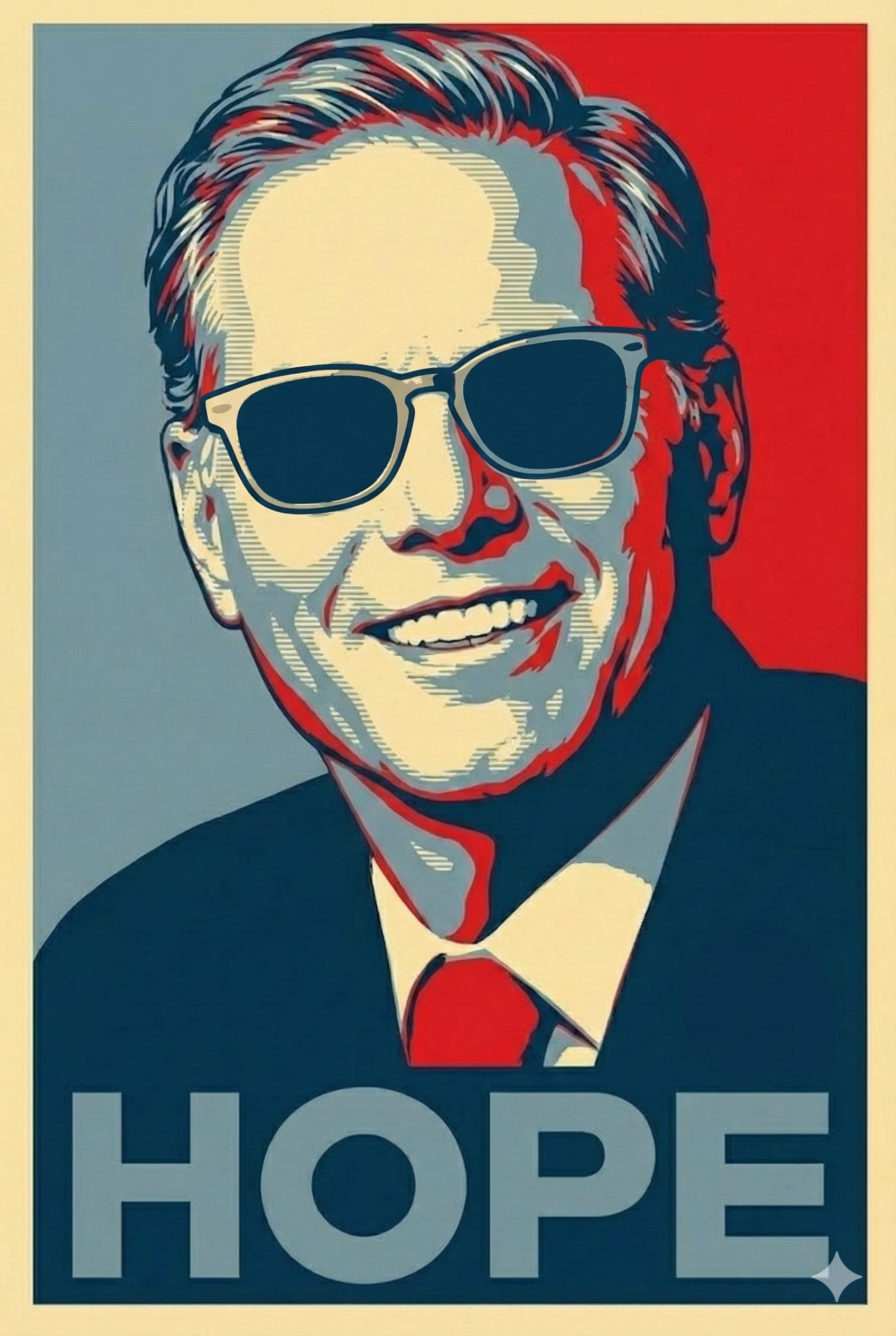
POD 164: The End of the Hollywood Model
The Netlix-Warner Bros-Paramount throuple is peak media M&A drama that intersects perfectly with political drama. Underneath the narrative, the main plotline is the end of Hollywood’s already ailing business model built around scarcity and cable economics. That’s why the big winner of this deal, no matter who ends up owning the asset, is David Zaslav, the consummate Deal Guy. Netflix owning Warner Bros would be a fitting end, as streaming upended the reliable bulwark of Hollywood’s business model and firmly put tech in control. Plus: The social stigma of AI-generated content, Kalshi’s uninspiring mission to financialize everything, Marco Rubio’s war on woke fonts, Shopify’s agentic commerce play, a new Scorsese documentary, and sad SaaS-vertising invading the NYC subway
Out FRIDAY AM Apple | Spotify | Substack
Troy: I can’t believe you keep bullying me for defending David Zaslav.
I get it. David may not be product / builder / auteur you would like to champion as your new media hero. I hate to say it but you risk sounding naive. History will be kind to Zaz, as will the people at the grown-up table who can read a balance sheet. I don’t want to get into a compensation discussion here. I am all for the manager class extracting whatever they can from capital, provided they hit the metrics. Let Elon take a trillion dollars if he makes ten trillion for investors.
Here’s the reality I see. Faced with apocalyptic disruption as the leader of a portfolio of declining cable channels, Zaz had to find a life raft. AT&T was mismanaging the Warner acquisition and needed an exit path. Zaz gave them the out. He recognized he needed a library to survive the streaming shift; he saw that consolidation was inevitable. It wasn’t without huge risk. Taking on a ton of debt. Merging two fucked up companies at a time of upheaval. Occupational hazards.
But let’s look at the positives. A stream of decent box office and streaming successes, including Minecraft, Superman, Sinners, F1, Weapons, House of Dragon, and The Last of Us. A profitable streaming service that, as of Q3, has 128 million global subs and 58 million in the US. Steady progress on cost structure and debt reduction. Separating the cable and studio assets to manage the next chapter of decline and disposition. Now, a bidding war.
But the bigger win was Discovery’s avoidance of ruin.
Look at the numbers in the Paramount tender offer. The market is currently valuing the “Global Networks” (the legacy cable assets) at an implied equity value of roughly $5 billion. That’s net of debt that the cable group would take on. Yes, that may be light given it’s Paramount’s estimate and in their interest to low-ball. But it’s not far off. Anyway…
Before the Warner deal, Discovery’s market cap was around $20 billion. Without Zaz’s intervention, Discovery shareholders were staring down the barrel of a drop from $20B to $5B—a 75% destruction of value as the cable bundle unwound.
Instead, Zaz used that $20B of equity to leverage control of a massive studio via a tax-efficient Reverse Morris Trust. Discovery shareholders retained 29% of the combined entity.
Now, Paramount is offering an enterprise value of $108 billion for WBD. The cash offer to shareholders is $78 billion. Discovery’s share (29%) of $78B = ~$22.6 billion.
Here is the “deal guy” magic in a nutshell:
Scenario A (No Deal): Discovery shareholders hold a standalone cable company worth ~$5B today.
Scenario B (The Zaz Trade): Discovery shareholders hold a stake in WBD worth ~$22.6B today.
Say what you want about financial “extractors.” Zaz saw the writing on the wall AND did something about it. He swapped a melting ice cube for a premier asset and quadrupled the outcome for his shareholders compared to the alternative. Could he have put his head down and turned Discovery into something modern? Doubtful.
Zaz didn’t change the company, he shifted the playing field. That’s deal guy creativity in a time of crisis. And that’s worth a lot.
Brian: Zaz understood the assignment
There’s nothing inherently wrong with Deal Guys. AB is a Deal Guy. They serve necessary roles in capitalism. I agree that in the fullness of time, Zaslav played a not-great hand well. As AB noted in our chat, the problem with Deals Guys is you never quite know how much was timing and what was true savviness. I see your point on how he used the Reverse Morris Trust so exquisitely. I appreciate tax efficiency.
None of it is particularly inspiring. But Zaslav’s assignment was to grow shareholder value, and he succeeded in doing so. Good for him. A needed fillip for the managerial class. The entrepreneurs are slobbered over, artists are always cool, engineers are getting their due, but responsible stewards of capital are rarely lauded.
This kind of corporate M&A drama has always bored me. It serves as banker and lawyer porn for a very dry exercise. Deals are attractive because they’re as “creative” as it gets in accounting and law. Large mergers are almost always terrible ideas.
Warner has been through this plenty of times in its history. It was the AOL-Time Warner deal that began the unravelling of the dot-com bubble. Gerry Levin was the Deal Guy on the hook for that one. John Stankey, another Deal Guy, thought he had a Deal of the Century in transforming AT&T by acquiring Time Warner. The logic actually involved 5G and would somehow be underpinned by using AT&T data for ad targeting. You start to realize as you get older, most people are making shit up. Deal Guys do deals because of synergies, sure, but a lot of it is ego.
🎻