



Geopolitics and the “Chinese Nostradamus”
"Professor Jiang predicted that Trump would return to office... he predicted that would lead to war with Iran."
The fragmentation of traditional media is allowing new, unlikely heroes like Professor Jiang to emerge on social networks. These "feral" analysts often predict major global events faster and more accurately than institutional media.
Professor Jiang uses a “Predictive History” system that adapts Isaac Asimov’s fictional psychohistory to identify recurring civilizational patterns through rigid structural analysis and game theory. His signature whiteboard sessions have made him a viral sensation among information junkies who value his raw, unmediated mapping of global shifts over polished mainstream media.
Listen: Pod 175: Systems Are King
Out FRIDAY 6 AM EST Apple | Spotify | Substack
The old media mantra was “content is king,” but in the Information Space systems are in charge. YouTube became a $550 billion juggernaut by building the infrastructure: the algorithm, the ad stack, the creator revenue share, the living room app. It spent more on content than almost anyone else without producing it. Meanwhile, legacy media companies that bet everything on premium content are pivoting to events, harvesting their websites for ad yield, and watching their audiences migrate to platforms they don’t control. X tells the same story: a product that isn’t even particularly good has become the most influential information network in the world because of the raw, unmediated network it sits on top of. On an individual level, those who can build personal systems are establishing leverage. The lesson: durable power doesn’t come from what you make, it comes from the networks you build around it.
A MOMENT IN MEDIA
“In a world filled with business model concerns, YouTube’s global scale and innovative offerings create an uncommonly high moat... unlike almost any other asset we cover, we strongly believe that YouTube will be a major beneficiary of both the structural tailwinds and headwinds facing technology and media companies.”
— Michael Nathanson, MoffettNathanson
This is a moment. The site, once seen as media’s UGC outsider, represents the triumph of bottoms up community innovation and platform infrastructure over top down rule and content ownership. By building the best algorithm, ad stack, and living room app, it has redefined what a media company is. It now earns $62 billion in revenue, more than Disney or Netflix. YouTube spends more on content that any other media company… but it’s all performance based. 🔗 YouTube Overtakes Disney in Revenue
ANOTHER MOMENT IN MEDIA
Oddly, someone behind the White House X account thought this Wii game spoof thing was cool. The replies are better.

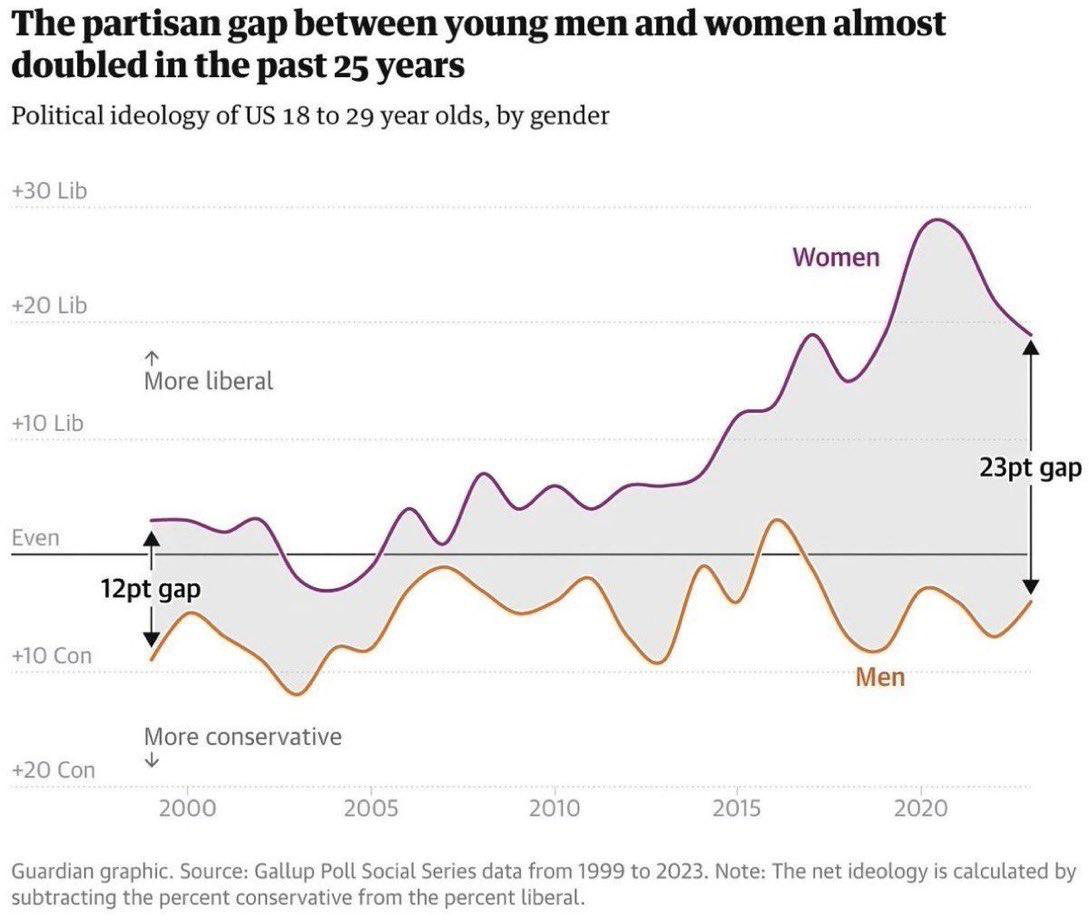
MIND THE GAP
HEARD ON POD
The inevitability of X
“X is very influential because it isn’t for the guy from Oshkosh. It’s for information junkies... the leverage is in the network.”
Despite claims of irrelevance, X remains a dominant network for the global elite. It serves as a raw information feed that drives the conversations of politicians and media moguls, acting as a point of immense leverage. Elon Musk has Engineering Brain; he knows how to identify points of leverage.
Geography of cool
“I think the West Village has become kind of like Dubai. It’s a symbol of something lost because New York is not cool anymore.”
Neighborhoods like the West Village and Williamsburg are losing their soul to gentrification and artifice. While Manhattan is dismissed as uncool, Belgrade is emerging as the “Berlin of 15 years ago” with a gritty, mysterious party atmosphere that is lost in Insta-ready hotspots. 🔗 It Must Be Nice to Be a West Village Girl
The Ozempic age of wellness
“Sauna is popular because it gives people the benefits of working out without working out. I believe that’s perfect for the Ozempic age.”
Biohacking through saunas and cold plunges is the perfect fit for an age defined by AI and Ozempic. These tools provide physical results with minimal effort, representing a broader cultural shift where people want the benefits of labor without the actual work. Remember: Cliff’s Notes weren’t made to replace reading the book, but they replaced reading the book. Give people a shortcut, they’ll almost always take it.
Publishers are talent managers
“This came up at this dinner quite a bit about publishers really trying to become talent organizations and the complete headache that comes along with that.”
Legacy media companies are transitioning from managing unions to managing talent and agents. Organizations that figure out how to structure deals that benefit both the individual brand and the institution will be the survivors. If media companies didn’t like dealing with unions, wait until they’re taking calls from agents.
Audiobook apocalypse
“They are then served up ambient visuals related to the story... It sort of lulls you into this passive, atmospheric pairing that we... our brains have been changed basically by the feeds and by the phones.”
A new behavior is emerging on YouTube where users listen to audiobooks while watching ambient visuals related to the story, like Harry Potter fans watching loop-scenes of Hogwarts. Our brains are being rewired to prefer passive, atmospheric pairings over active reading. This is Baby Reading™. 🔗 How ‘ambiance videos’ are changing how we read.
Industrialization of writing
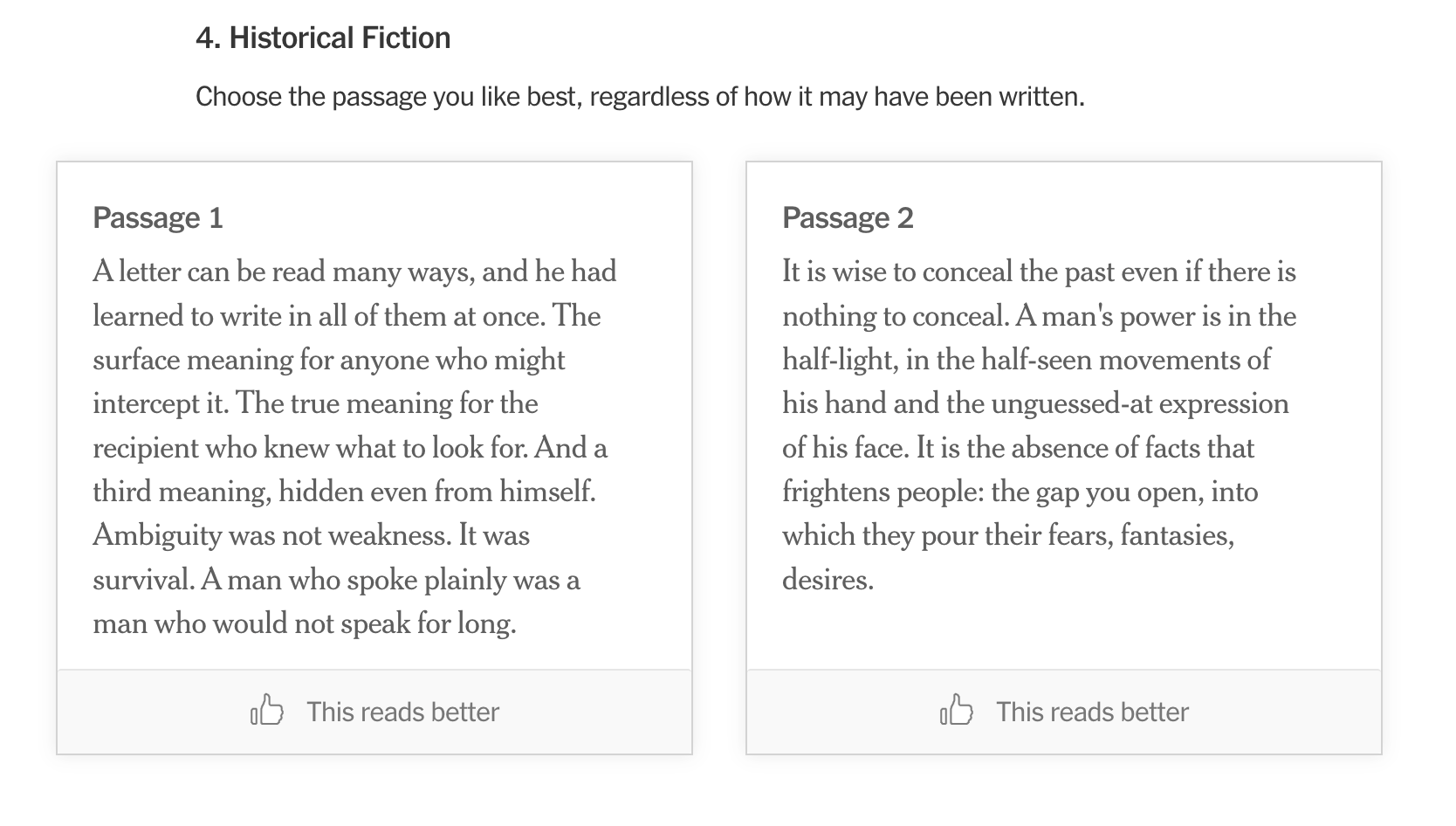
“AI is going to do all the writing, let’s be honest... if an AI can solve the world’s most complicated challenges... it can do your writing.”
For most written communication, the manual craft of stitching sentences together is losing its premium. News organizations will soon feed raw reporting into bots that produce the final copy, shifting writing from a manual craft to industrial production. Reporting was always more valuable than writing. More value should accrue to those unearthing non-public information who have a track record of accuracy. There will always be a market for information. The value of “storytelling” was always inflated. 🔗 Who’s a Better Writer: A.I. or Humans? Take Our Quiz.
Tribal grammer
“Epstein and the billionaire class like to use terrible grammar... this is yet another sort of power move.”
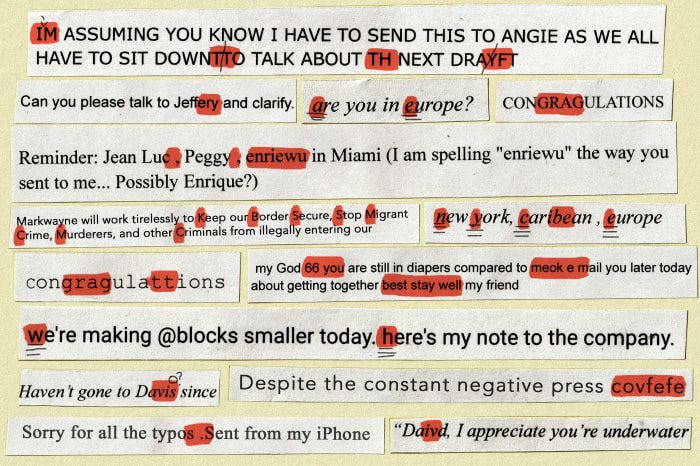
The intentional use of poor grammar by the elite class is a tribal power move that forces subordinates to scramble to divine the actual meaning of cryptic messages. Every tribe creates its own language to signal belonging and authority. It’s also a BSD move. 🔗 Why the Wealthy Use Terrible Grammar
Bifurcation of the open web
“The open web bifurcates and it becomes... mass extraction of value on a web page with horrific... Mad Max style hyper-monetization.”
The web is splitting into two distinct experiences: a “Mad Max” style of hyper-monetized content extraction and a niche, artisanal world where people start from scratch. Publishers are increasingly focusing on small “lifeboats” like specialized real estate tools and cookie exchanges in Cleveland. These businesses often need to be rebuilt from the studs.
The events lifeboat
“Time says revenue from events is on pace to make up over 50% of total revenue.”
Major brands like Time Magazine are surviving by pivoting away from traditional ad revenue and toward events. This strategy focuses on monetizing brand influence through high-touch gatherings rather than open web traffic. Even better is when events get you into a B2B category rather than another consumer publisher slinging ads on pages. 🔗 Time Magazine’s Pivot to Events
Geriatric media
“News is media for old people... Almost three quarters of wealth now is held by those 55 plus.”
Media has historically focused on the 18 to 35 demographic, but the wealth has shifted to those over 55. Successful media models are increasingly gravitating toward association businesses like AARP that serve the demographic holding the money. 🔗 AARP and the business of an aging audience
Workplace surveillance
“The workplace was begun mostly because the bosses, the merchants, wanted to surveil and control the workers.”
The battle over returning to the office is fundamentally about surveillance and control. Since the merchant era, the physical workplace has functioned as a system for the boss class to monitor and manage labor. 🔗 How Capitalism Took Over the World

CNN is not entertaining
“CNN... it’s caught between being a news network and an entertainment product... it’s a bad entertainment product.”
CNN struggles because it remains an honest news network that fails to compete as an entertainment product. While Barry Diller sees it as a fixable asset, it lacks the engagement of competing news/entertainment formats. Better to take a page out of Friends Keep Secrets, a mishmash of a talk show and reality series. Bonus: They make the ads fun.
The future of Excel
“If you turn in Excel more into... something more dimensional that is guided by AI, you can see much better outcomes.”
Financial modeling is moving beyond static sheets toward AI-guided apps. This allows analysts to track hundreds of variables with high fidelity, creating a better understanding of business outcomes. 🔗 Prediction re the end of spreadsheets
AI’s new high-leverage guy
“He could now create funnels from his mind to his voice, to the machine... in like one hundredth of the time that it used to take.”
High-leverage individuals are using AI dictation tools to achieve staggering output, creating entire sales funnels in minutes. This industrialization of thought means value is found in an operator’s logic rather than manual labor that makes it real.
The death of privacy
“With AI privacy is dead and we will have to get over it.”
The default assumption today is that everything is being recorded. Companies are recording corporate interactions to train AI agents that can eventually replace human tasks. Mass surveillance is inevitable. Maybe the third-party cookie wasn’t so bad after all. 🔗 The New Surveillance State Is You
GOOD PRODUCT
Sometimes you have back pain and you need a Good Product.
The Soft Roller: A less painful alternative to traditional hard foam rollers, specifically the “Melt” version. It is highly effective for alleviating stubborn aches.

The Back Peanut: Two connected balls designed to place specific pressure on the spine. A foundational tool for pressure relief. Rubber or cork.
Like the links? Think we could do better? Let us know!